
- Your cart is empty
- Continue Shopping
Sunburn or houseburn: What to do?
- Prevention and well-being
- Posted on
-
by farmbert
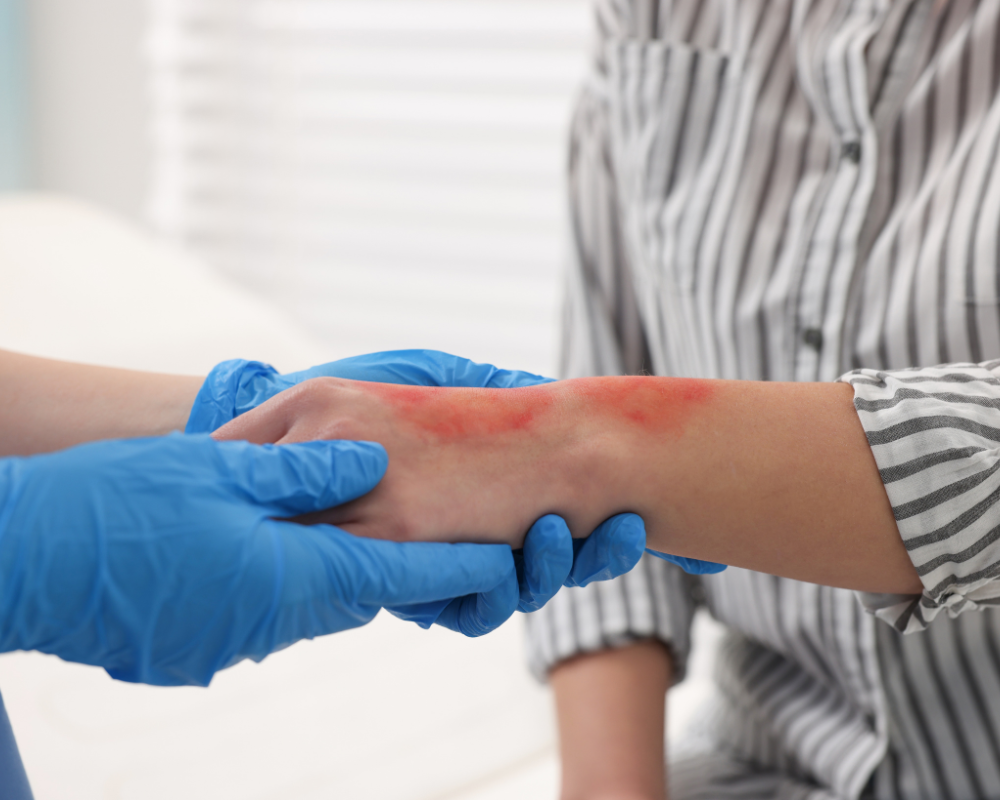
A sunburn or a household burn can occur within seconds. Prolonged exposure to the sun, a splash of boiling water or contact with a hot pan are common situations.
During the first few minutes, one rule is essential: cool the burned area under cool running water for around 20 minutes.
Do not apply ice, toothpaste, butter, oil or other home remedies. These products do not treat the burn and may worsen the injury or make it more difficult to assess.
What should you do immediately after a burn?
In the event of a heat-related burn:
- Move the person away from the heat source.
- Place the affected area under cool running water for 20 minutes.
- Remove rings, watches and tight clothing that is not stuck to the skin.
- Protect the burn without applying pressure.
- Check its size, colour, sensitivity and whether blisters are present.
Cooling should begin as soon as possible. Water helps to reduce tissue temperature, pain and swelling. Current first-aid recommendations advise cooling the area for at least 20 minutes.
Use cool water, not ice
The water should be cool or lukewarm, but not ice-cold.
Ice and very cold water may cause further tissue damage. They also increase the risk of a drop in body temperature, especially when the burn covers a large area.
For babies, young children, older adults or frail people, cool only the affected area. Keep the rest of the body covered and warm.
Remove objects before swelling develops
Carefully remove:
- rings;
- bracelets;
- watches;
- belts;
- footwear;
- tight clothing close to the burn.
Do this before the area begins to swell.
This measure is particularly important for the hands, fingers, feet and wrists.
Do not remove clothing stuck to the skin
Only remove clothing that comes away easily.
When fabric is stuck to the burn, do not pull it or attempt to peel it away. You may cut the clothing around the attached area without touching the injury and seek medical assistance.
How should you protect the burn after cooling?
After cooling the area for 20 minutes, you may temporarily cover a small burn with:
- a sterile non-adherent dressing;
- a clean dressing without loose fibres;
- clean plastic wrap placed loosely over the area, without tightening it or wrapping it around the limb.
Do not place cotton wool directly on the injury. The fibres may become stuck to the skin.
The covering should remain loose because the area may swell over the following hours.
How can you assess the severity of a burn?
The initial appearance does not always reveal the true depth of the injury. Some burns become more apparent over the following hours.
Check:
- the colour of the skin;
- the size of the affected area;
- whether blisters are present;
- skin sensitivity;
- the intensity and progression of the pain;
- the location of the injury.
Pain alone cannot be used to assess severity. A deep burn may cause little pain at the centre of the injury because the nerve endings have been damaged.
Superficial burn
A superficial burn affects the outermost layer of the skin.
It may cause:
- redness;
- warmth;
- pain or a burning sensation;
- tenderness;
- mild swelling;
- intact skin without blisters.
Mild sunburn is a common example.
A small, superficial area without blisters can often be cared for at home. Keep the area clean, protected and under observation.
Burn with blisters
Blisters may indicate a partial-thickness burn, traditionally known as a second-degree burn.
The skin may be:
- very painful;
- red;
- moist;
- swollen;
- tender to the touch.
Do not burst the blisters.
The skin covering a blister acts as a natural barrier against friction and contamination. Blisters associated with burns should be kept clean and protected.
Seek professional advice when the blisters are large, numerous or located on the face, hands, feet, joints or genitals.
Signs of a deep burn
A deep burn may cause:
- white, grey, brown or black skin;
- a dry, hardened or leathery appearance;
- charred areas;
- loss of sensation;
- little pain in the centre despite the severe appearance;
- visible destruction of the skin.
These burns require urgent medical assistance. Do not apply creams, ointments or home remedies.
What should you apply to sunburn?
For mild sunburn, the aim is to cool the skin, reduce discomfort, maintain hydration and avoid further exposure to sunlight.
Seek medical assessment if there are extensive blisters, fever, dizziness, nausea or severe discomfort.
Take a cool bath
Take a cool bath or place a clean, damp compress over the affected area.
Afterwards:
- pat the skin dry gently;
- do not rub it with a towel;
- avoid ice-cold water;
- do not apply ice directly.
You may reapply the compresses for a few minutes whenever the skin feels very hot.
Apply moisturiser only to intact skin
When the skin is intact, you may apply a gentle moisturiser or emollient.
Choose a formula that is:
- fragrance-free;
- alcohol-free;
- suitable for sensitive skin;
- free from ingredients that cause stinging.
Apply the product gently without pressing on the skin. A moisturiser may help to reduce dryness and discomfort. The American Academy of Dermatology recommends cool baths and gentle moisturisers as part of sunburn care.
Do not apply cosmetics, sunscreen or moisturisers directly to open wounds or burst blisters without professional advice.
Drink more water
Extensive sunburn may increase fluid loss through the skin.
Drink water regularly and watch for signs such as:
- intense thirst;
- dizziness;
- weakness;
- headache;
- dark or infrequent urine.
Hydration is especially important when the burn affects a large area.
Avoid further sun exposure
While the skin is healing:
- remain in the shade;
- wear loose, soft clothing;
- cover the affected area;
- do not pull off peeling skin;
- do not expose the burn to the sun again.
Once the skin has completely healed, protect the area with clothing and a broad-spectrum, water-resistant sunscreen with an SPF of 30 or higher.
How can you relieve pain safely?
Ask a pharmacist for advice before taking a painkiller or anti-inflammatory medicine.
The appropriate choice may depend on factors such as:
- age;
- pregnancy or breastfeeding;
- allergies;
- stomach problems;
- kidney disease;
- cardiovascular disease;
- asthma;
- regular medication.
Do not exceed the recommended doses, and check whether any other medicines you take contain the same active ingredient.
What should you apply to a superficial household burn?
The first treatment is not a cream. It is cool running water for around 20 minutes.
Immediately after the accident, creams, ointments and greasy substances may trap heat or make it more difficult to assess the burn.
After cooling, a small, red and painful area with intact skin and no blisters may be protected with a sterile non-adherent dressing.
Over the following days, if the skin remains closed but becomes dry or uncomfortable, a pharmacist may recommend a suitable emollient.
Seek assessment whenever you are unable to determine the depth of the injury.
Burn with blisters: what should you do?
A blister temporarily protects the tissues underneath it.
Deliberately bursting it may:
- expose the damaged skin;
- increase pain;
- allow microorganisms to enter;
- increase the risk of infection;
- delay healing.
Do not use needles, scissors or other objects to pierce the blister.
What should you do if the blister bursts?
If the blister bursts on its own:
- Wash your hands.
- Gently clean the area with water.
- Do not remove any skin that is still attached.
- Do not apply alcohol or hydrogen peroxide.
- Cover it with a sterile non-adherent dressing.
- Seek advice from a pharmacist or doctor.
- Monitor the area over the following days.
Increasing pain, pus, an unpleasant smell, warmth, swelling or spreading redness may indicate an infection.
The main mistakes when treating a burn
Applying ice directly
Ice is not a substitute for running water.
Contact with very low temperatures may cause further tissue damage. Use cool water for around 20 minutes.
Using toothpaste, butter or oil
These products do not treat the burn.
They may:
- trap heat;
- irritate the skin;
- contaminate the injury;
- make cleaning more difficult;
- prevent an appropriate assessment.
Cooling the area for only a few seconds
Briefly running the area under water may ease the pain, but it is usually not enough.
Continue cooling for around 20 minutes.
Bursting the blisters
An intact blister protects the tissues. Do not pierce, cut or remove it.
Applying a cream before assessing the injury
Not all burns should be treated with the same product.
The appropriate choice depends on the depth, size and location of the burn and on the condition of the skin. Seek professional advice if you have any questions.
What should never be applied to a recent burn?
Avoid applying the following to a recent burn:
- ice;
- ice-cold water;
- toothpaste;
- butter or margarine;
- olive oil or other oils;
- egg white;
- alcohol;
- hydrogen peroxide;
- perfume;
- essential oils;
- perfumed creams;
- flour or powders;
- topical antibiotics without professional advice;
- prescription medicines;
- cotton wool directly on the injury.
When should you seek medical assistance?
Some burns require urgent assessment, even when the affected area appears small.
Seek medical assistance when:
- the burn affects the face or eyes;
- it affects the hands, feet, joints, genitals or perineum;
- there are large or numerous blisters;
- the affected area is larger than the palm of the person’s hand;
- the skin is white, brown, black or charred;
- there is a loss of sensation;
- the pain is very severe or is becoming worse;
- the burn extends all the way around a finger, arm, leg or another part of the body;
- it was caused by electricity;
- it was caused by a chemical;
- smoke inhalation is suspected;
- breathing difficulties develop;
- the person becomes confused, weak or faints;
- there are signs of infection;
- the burn occurred in a baby, young child or older adult;
- the person has diabetes, circulation problems or a weakened immune system;
- the injury becomes worse or does not appear to be healing properly.
For chemical burns, remove contaminated clothing without touching the product directly and rinse the area with plenty of water. Contact a poison information centre or the emergency services for instructions appropriate to the substance involved.
Call 112 in the event of breathing difficulties, changes in consciousness, electrical burns, deep burns or extensive injuries.
How should you care for the skin during recovery?
Recovery depends on the depth and size of the burn. A superficial injury usually improves gradually, but you should continue to monitor the skin.
Maintain gentle hygiene
Wash the area according to the advice you have received. Use water and avoid friction.
Do not rub the skin with sponges, rough towels or exfoliating products.
Protect the skin from friction
Avoid tight clothing and movements that cause rubbing over the burn.
When using a dressing, make sure it does not stick to the injury or apply excessive pressure.
Moisturise intact skin only
A simple moisturiser may help when the skin is closed and there are no wounds.
If there are burst blisters, areas of missing skin or discharge, seek advice before applying any product.
Avoid the sun
Recently burned skin is more sensitive to sunlight. Cover the area with clothing and remain in the shade.
Once the skin has completely healed, use a broad-spectrum sunscreen with a high sun protection factor. Sun protection helps to prevent another burn and changes in pigmentation.
Watch for signs of infection
Seek help if you notice:
- increasing redness;
- worsening swelling;
- intense warmth;
- pus;
- an unpleasant smell;
- fever;
- worsening pain;
- red streaks near the injury.
In summary, when dealing with a sunburn or household burn, the first step is to place the area under cool running water for around 20 minutes.
Avoid ice, toothpaste, butter, oils and other home remedies. Do not burst blisters or remove clothing that is stuck to the skin.
A small, superficial burn without blisters may be treated with simple care. However, extensive, deep, electrical or chemical burns, or burns located in sensitive areas, require medical assessment.
Have you suffered a mild burn and are unsure about the most appropriate care? Speak to the Farmácia Aberta team and ask for personalised advice from a pharmacist.
Frequently Asked Questions
1. What should be applied first to a burn?
The first step is to run cool water over the area for about 20 minutes. Avoid applying creams, ice, or homemade products before cooling the area.
2. For how long should the burn be kept in water?
Keep the area under cool running water for about 20 minutes. Start as soon as possible.
3. Can you put ice on a burn?
No. Ice can cause further frostbite and damage tissues. Use cool running water.
4. Should a burn blister be popped?
No. The blister protects the skin underneath. Bursting it increases the risk of pain and infection.
5. Can you apply toothpaste to a burn?
No. Toothpaste does not treat burns and may irritate or contaminate the skin.
6. How do you know if a burn requires medical evaluation?
Seek help if you have extensive blisters, white or black skin, loss of sensation, intense pain, or lesions on your face, hands, feet, joints, or genitals.
7. What to do when the bubble bursts on its own?
Avoid picking at the skin. Gently clean the area, protect it with a non-adherent dressing, and seek advice from a healthcare professional.
Bibliographic References
- Griffin BR, Frear CC, Babl F, et al. Cool Running Water First Aid Decreases Skin Grafting Requirements in Pediatric Burns: A Cohort Study of Two Thousand Four Hundred Ninety-five Children. Annals of Emergency Medicine. 2020;75(1):75-85. doi: 10.1016/j.annemergmed.2019.06.028.
- Cuttle L, Fear M, Wood FM, et al. Management of non-severe burn wounds in children and adolescents: optimising outcomes through all stages of the patient journey. The Lancet Child & Adolescent Health. 2022;6(4):269-278. doi: 10.1016/S2352-4642(21)00350-3.
- Liu HY, Alessandri Bonetti M, Shockey S, et al. Cross-Sectional Study on the Management of Nonoperative Burns at American Burn Association-Verified Burn Centers. Journal of Burn Care & Research. 2025;46(5):1128-1132. doi: 10.1093/jbcr/iraf102.
- Lopes DM, McMahon SB. Ultraviolet Radiation on the Skin: A Painful Experience? CNS Neuroscience & Therapeutics. 2016;22(2):118-126. doi: 10.1111/cns.12444.
- Lloyd ECO, Rodgers BC, Michener M, et al. Outpatient Burns: Prevention and Care. American Family Physician. 2012;85(1):25-32.
- NHS. Burns and scalds: symptoms, treatment and when to seek medical help. Revisto em março de 2026.
- American Academy of Dermatology Association. How to Treat Sunburn. Atualizado em 2024.
- British Red Cross. First Aid for Burns: signs, first aid steps and when to seek medical help.


