
- Your cart is empty
- Continue Shopping
Atopic dermatitis: how to recognize the symptoms and care for your skin.
- Sem categoria
- Posted on
-
by farmbert
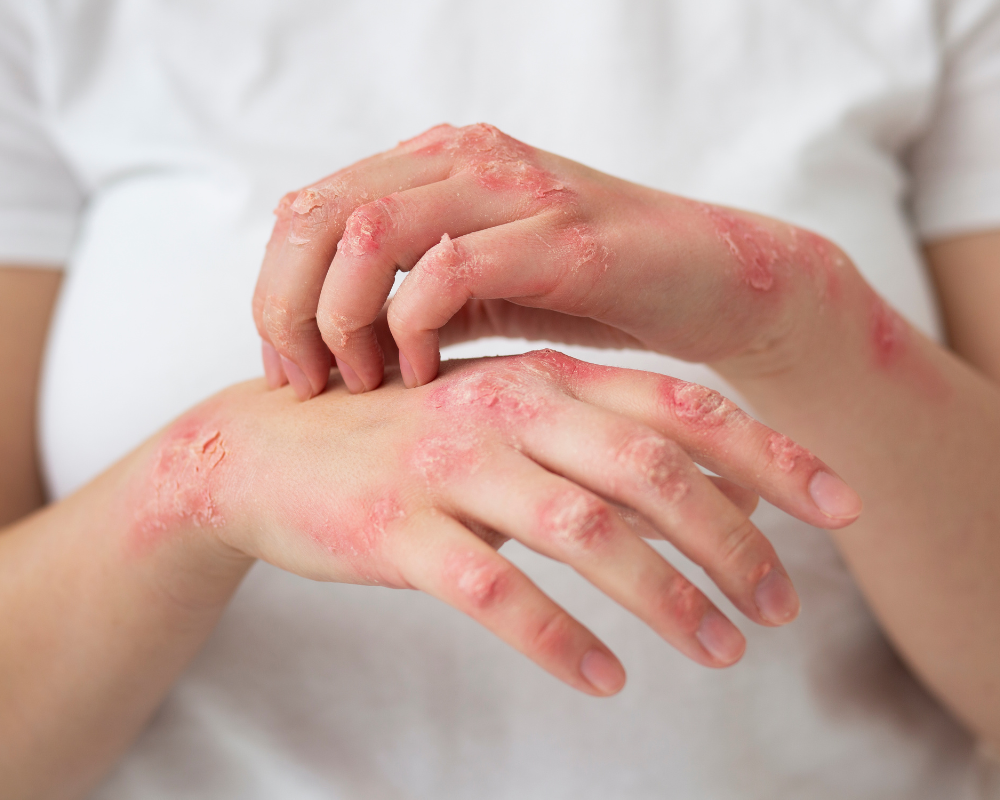
There are nights when the itching offers no relief. The child wakes up, scratches, and the skin becomes even more irritated. In adults, a flare-up can make simple actions such as putting on a jumper, taking a shower, or washing their hands uncomfortable.
Atopic dermatitis is not simply “dry skin”. It is an inflammatory skin condition that alternates between calmer periods and phases when symptoms worsen. These phases are often called flare-ups.
Although it is more common in children, it can also affect adolescents and adults. In some people, the lesions appear only in a small area. In others, they cover larger areas and interfere with sleep, concentration, and well-being.
The good news is that an appropriate routine can help protect the skin and reduce discomfort.
What is atopic dermatitis?
The skin has a protective layer that helps retain water and prevent irritating substances from entering.
In atopic dermatitis, this protection is weakened. The skin loses water more easily, becomes dry, and reacts more strongly to external factors such as heat, sweat, certain hygiene products, or rough fabrics.
There is also a stronger inflammatory response. In some people, genetic factors affect proteins that are important to the skin’s structure, such as filaggrin. Even so, atopic dermatitis does not have a single cause. It results from a combination of genetics, the immune system, the environment, and the balance of microorganisms present on the skin.
Atopic dermatitis:
- Is not contagious;
- Is not caused by poor hygiene;
- Is not simply an allergy;
- Can occur in flare-ups;
- Can affect sleep quality and family life.
What are the most common symptoms?
Dryness and itching are the most characteristic signs.
Scratching damages the skin, increases inflammation, and can cause small wounds. This creates a cycle that can be difficult to break: the skin itches, the person scratches, and the irritation becomes worse.
Other symptoms include:
- Dry, rough, or flaky skin;
- Inflamed areas;
- Small cracks;
- Wounds caused by scratching;
- Crusts;
- Oozing during some flare-ups;
- Thicker skin in areas that have been scratched for a long time;
- Changes in skin colour after inflammation.
On lighter skin tones, the lesions may appear red. On darker skin tones, they may look brown, purple, or grey. Sometimes, the affected area becomes lighter or darker after a flare-up.
Atopic dermatitis can also disrupt sleep. In children, tiredness may cause irritability and difficulty concentrating. In adults, it may affect work, rest, and self-confidence.
Where does it usually appear?
The location of the lesions changes with age.
In babies
The lesions often appear:
- On the cheeks;
- On the scalp;
- On the torso;
- On the arms and legs.
The area covered by the nappy is usually unaffected. The baby may seem irritable, sleep less well, or rub their face against clothing and bedding.
In children
Atopic dermatitis often affects the folds of the elbows and knees. It may also appear on the wrists, ankles, and neck.
When a child scratches repeatedly, the skin may become thicker and rougher.
In adolescents and adults
The most commonly affected areas include:
- Hands;
- Eyelids;
- Face;
- Neck;
- Elbows;
- Backs of the knees.
Some adults only develop hand eczema. Frequent contact with water, detergents, or cleaning products can make this condition worse.
How is atopic dermatitis diagnosed?
There is no single test that confirms every case.
The diagnosis is clinical. This means that the doctor assesses the skin, the symptoms, and the person’s medical history.
The main factors considered are:
- Itching;
- Lesions that look like eczema;
- Symptoms that persist or return;
- The distribution of the lesions according to age;
- A personal or family history of dermatitis, asthma, or rhinitis.
Allergy tests are not necessary for everyone. They may be considered when there is a specific suspicion of an allergy or a clear relationship between a particular exposure and worsening skin symptoms.
When the lesions have an unusual appearance or do not improve with the prescribed care, the doctor may investigate other causes. Contact dermatitis, certain infections, and other skin conditions can cause similar symptoms.
What can trigger a flare-up?
Triggers vary from person to person. It is not always possible to identify a specific cause.
The most common factors include:
- Heat and sweating;
- Cold or very dry air;
- Long, very hot baths or showers;
- Perfumes and fragrances;
- Harsh soaps;
- Detergents and cleaning products;
- Rough fabrics, such as wool;
- Tight clothing;
- Stress;
- Skin friction;
- Infections.
It can be useful to observe when symptoms become worse. Keeping a brief record may help identify patterns. For example, you can note the products used, the type of clothing worn, the temperature, and the activities carried out that day.
There is no need to eliminate every possible trigger. The aim is to recognise those that genuinely appear to affect the person.
Does food cause atopic dermatitis?
Atopic dermatitis should not automatically be attributed to a particular food.
Some people, especially children, may also have a food allergy. However, this does not mean that every flare-up is caused by food.
Removing milk, eggs, wheat, or other foods without a clinical assessment can lead to nutritional deficiencies. This risk is particularly important during childhood.
When a food allergy is suspected, seek medical advice. Do not begin an exclusion diet based solely on the appearance of the skin.
How to care for atopic skin every day
Daily care helps protect the skin barrier. It should continue even when there are no inflamed areas.
1. Apply an emollient every day
An emollient is a product that helps reduce water loss and soften the skin.
It may come in the form of a lotion, cream, balm, or ointment. The most appropriate texture depends on the area of the body, the degree of dryness, the person’s age, the season, and individual preference.
An ointment may work better on very dry areas. A cream may feel more comfortable over larger areas. A lotion may be easier to apply to hairy areas or when dryness is mild.
There is no single ideal texture for everyone. Applying the product regularly is usually more important than the format chosen.
Choose products that are:
- Fragrance-free;
- Made with few ingredients;
- Suitable for sensitive skin;
- Comfortable to use every day.
The emollient should be applied to all areas of dry skin, not only to the lesions. Spread it gently without rubbing the skin forcefully.
2. Keep baths and showers short
There is no need to avoid bathing.
You may bathe or shower every day or every other day, depending on how well the skin tolerates it. The most important thing is to avoid very hot water and prolonged baths or showers.
During bathing:
- Use lukewarm water;
- Choose a gentle cleansing product;
- Avoid rough sponges;
- Do not rub irritated areas;
- Pat the skin dry gently;
- Apply the emollient shortly afterwards.
Hot water and some hygiene products remove part of the skin’s natural oils. This can increase dryness and itching.
3. Choose comfortable clothing
Clothing should be soft and loose-fitting. Cotton is usually well tolerated.
Wool and some synthetic fabrics may cause itching. It is also advisable to wash new clothes before wearing them for the first time.
Use a gentle detergent and rinse clothing thoroughly. Strong fragrances in detergents or fabric softeners may irritate some types of skin.
4. Reduce damage caused by scratching
Keep nails short and clean. In young children, this measure helps reduce wounds caused by scratching during the night.
When itching occurs, a cool compress may provide temporary relief. Do not apply ice directly to the skin.
A bedroom that is too warm can also make discomfort worse. Choose lightweight bedding and adjust the room temperature before going to sleep.
What should you do during a flare-up?
During a flare-up, the skin becomes more inflamed, and moisturising alone may not be enough.
The doctor may prescribe an anti-inflammatory medicine to apply directly to the lesions.
Topical corticosteroids
Topical corticosteroids are one of the main options used to control inflammation.
They are available in different strengths. The choice depends on:
- Age;
- The area of the body;
- The extent of the lesions;
- The severity of the flare-up;
- The thickness of the skin.
The face, eyelids, skin folds, and genital area require special care. The skin in these areas absorbs the medicine more easily.
Always use the corticosteroid in the amount, at the frequency, and for the duration recommended by the doctor. Do not use a product left over from a previous flare-up or one prescribed for another person.
When used correctly, a topical corticosteroid can help control inflammation. Incorrect, excessive, or prolonged use may cause unwanted effects.
Other topical options
In some situations, the doctor may prescribe anti-inflammatory medicines that do not contain corticosteroids.
These options may be useful in sensitive areas or when flare-ups return frequently. Some may cause a burning sensation during the first applications, but this discomfort usually decreases.
The choice depends on the person’s age, the location of the lesions, and the response to previous treatments.
Preventing new flare-ups
When atopic dermatitis repeatedly returns to the same areas, the doctor may recommend a preventive strategy.
This strategy may include the intermittent application of a topical medicine to the most problematic areas, even after the flare-up has improved. Daily use of an emollient should continue.
This plan requires medical guidance. It should not be started without professional advice.
Moderate or severe atopic dermatitis
When flare-ups are widespread, frequent, or resistant to topical treatment, a dermatologist may assess other options.
These may include phototherapy or medicines that act on the inflammatory response. The decision requires an individual assessment and clinical follow-up.
Do antihistamines relieve itching?
Antihistamines are known for their use in allergies. However, they do not treat the inflammation that causes atopic dermatitis.
For this reason, they are not routinely recommended to control itching caused by this condition.
They may be necessary when another allergic condition is present or when there is a specific indication. Ask for advice before using them.
When should you seek help?
Arrange a medical assessment if:
- The itching interferes with sleep;
- Flare-ups occur frequently;
- The lesions cover a large area;
- The skin does not improve with the usual care;
- The dermatitis affects the eyelids or the area around the eyes;
- The child appears very uncomfortable;
- You have questions about how to use the medicines;
- The symptoms affect school, work, or family life.
Signs that require prompt attention
Seek clinical support promptly if the skin:
- Becomes painful or very hot;
- Produces pus;
- Develops yellowish crusts;
- Oozes a large amount of fluid;
- Worsens quickly;
- Develops small, painful blisters;
- Is accompanied by fever or a general feeling of being unwell.
Skin affected by atopic dermatitis is more vulnerable to infections. Small wounds caused by scratching can make it easier for bacteria or viruses to enter.
The rapid appearance of small, painful blisters, particularly on the face or near the eyes, requires urgent assessment.
In summary, living with atopic dermatitis can be tiring. Itching and repeated flare-ups can make daily life more demanding.
There is no need to change everything at once. Start with the essential measures: short baths or showers, gentle products, daily moisturising, and attention to the factors that make symptoms worse.
When the skin is very inflamed, causes pain, or interferes with sleep, do not delay seeking an assessment. A plan adapted to the person’s age, the affected area, and the severity of the flare-ups can make a difference in controlling the condition.
The Farmácia Aberta team can help you review your hygiene and moisturising routine. Bring the products you use with you and explain when you experience the greatest discomfort.
Frequently Asked Questions
1. Is atopic dermatitis contagious?
No. It is not transmitted through touch, clothing, towels, or sharing objects.
2. Are atopic dermatitis and eczema the same thing?
Eczema is a general term for various diseases that cause inflammation of the skin. Atopic dermatitis is one of the most common types of eczema.
3. Is atopic dermatitis an allergy?
It’s not just an allergy. It involves changes in the skin barrier, genetic factors, and an inflammatory response. Some people also have asthma, rhinitis, or food allergies.
4. What is the best cream for atopic skin?
There is no single ideal product for everyone. The most suitable one is the one that doesn’t irritate the skin, has a comfortable texture, and can be used regularly.
5. Should the emollient only be applied to inflamed areas?
No. It should be applied to all dry skin, even during periods without visible lesions.
6. Can a person with atopic dermatitis shower every day?
Yes, provided the bath is short, with lukewarm water and a mild hygiene product. The emollient should be applied shortly afterwards.
7. Are topical corticosteroids dangerous?
They can cause undesirable effects when used incorrectly. When the prescribed potency, dosage, and duration are respected, they are an important option for controlling seizures.
8. Can atopic dermatitis disappear with age?
Many children improve over the years. However, the disease may persist or reappear in adolescence and adulthood.
9. Is it necessary to change my diet?
Not as a routine measure. Dietary restrictions should only be considered when there is a well-founded clinical suspicion and medical evaluation.
10. Do supplements help control dermatitis?
There is insufficient evidence to routinely recommend supplements, oils, probiotics, herbal medicine, or homeopathy as a treatment for atopic dermatitis.
Bibliographic References
- Ständer S. Atopic Dermatitis. New England Journal of Medicine. 2021;384:1136–1143. DOI: 10.1056/NEJMra2023911.
- Langan SM, Irvine AD, Weidinger S. Atopic dermatitis. The Lancet. 2020;396(10247):345–360. DOI: 10.1016/S0140-6736(20)31286-1. PMID: 32738956.
- Weidinger S, Beck LA, Bieber T, Kabashima K, Irvine AD. Atopic dermatitis. Nature Reviews Disease Primers. 2018;4:1. DOI: 10.1038/s41572-018-0001-z. PMID: 29930242.
- Mendes AP. Atopic Dermatitis I — Non-Pharmacological Care. Medicines Information Centre, Portuguese Pharmaceutical Society. 2018.
- Mendes AP. Atopic Dermatitis II — Pharmacological Treatment. Medicines Information Centre, Portuguese Pharmaceutical Society. 2019.


