
- Your cart is empty
- Continue Shopping
Keratosis pilaris on the arms: how to soften the skin?
- Hair Health
- Posted on
-
by farmbert
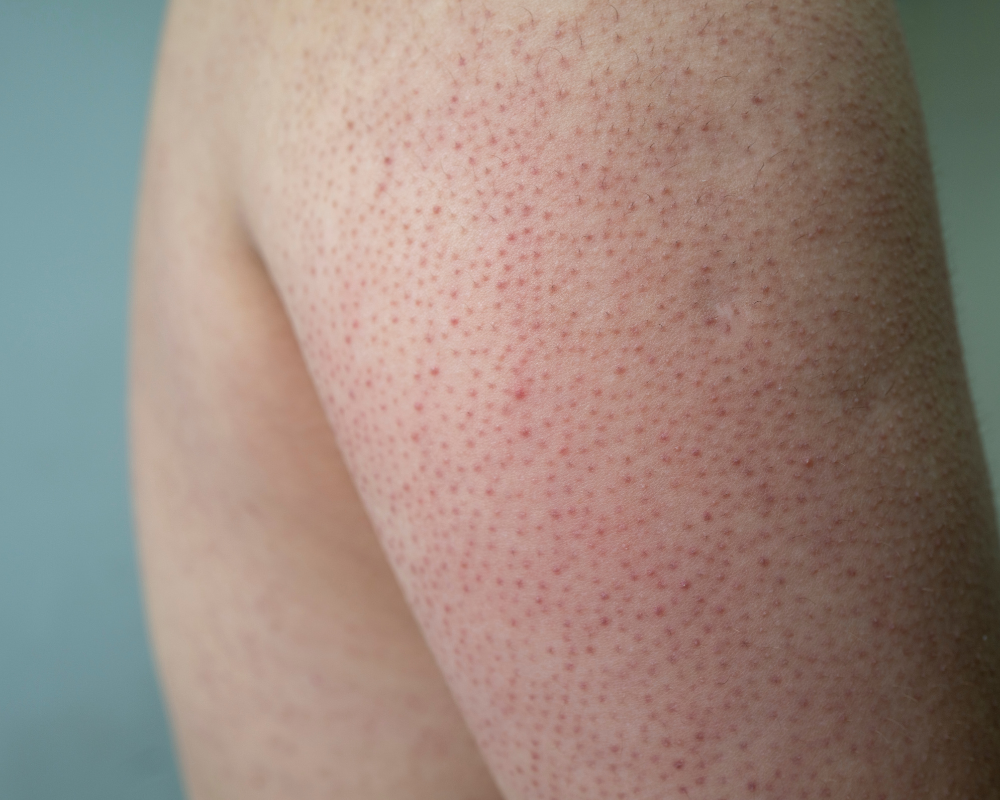
Do you have small, rough bumps on your arms, similar to goosebumps that never seem to go away? This texture, often described as “chicken skin”, may be keratosis pilaris.
Keratosis pilaris is a very common, benign and non-contagious skin condition. It occurs when keratin builds up in the hair follicles, forming small, dry and rough bumps.
Although there is no permanent cure, daily moisturising and the careful use of active ingredients such as urea, lactic acid or salicylic acid may help make the skin smoother. Results are gradual and require consistency.
What is keratosis pilaris?
Keratosis pilaris occurs when keratin builds up around the openings of the hair follicles.
Keratin is a protein found in the skin, hair and nails. It has a protective function, but when it accumulates in a follicle, it may form a small plug.
This plug creates a bump on the surface of the skin and causes the rough texture that is characteristic of the condition. When you run your hand over the area, it may feel similar to fine sandpaper.
Keratosis pilaris:
- Is benign.
- Is not contagious.
- Is not an infection.
- Is not caused by poor hygiene.
- May persist for several years.
- Often appears during childhood or adolescence.
- Is a common and harmless clinical condition, although it may cause cosmetic concerns, dryness or mild itching.
How can you recognise keratosis pilaris?
The most characteristic sign is the presence of small bumps located very close together.
These bumps are usually uniform, painless and centred around the follicles. They may be the same colour as the skin or have a reddish, brown or darker tone, depending on the person’s skin tone.
The most common signs include:
- Dry, rough skin.
- Small bumps around the hairs.
- Fine flaking.
- Redness around the follicles.
- Brown or dark spots on some skin tones.
- Mild itching, particularly when the skin is dry.
Pain, pus, warmth, sores or severe inflammation are not typical of keratosis pilaris and may indicate another condition, such as folliculitis.
Which areas of the body are affected?
Keratosis pilaris mainly appears:
- On the outer upper arms.
- On the thighs.
- On the buttocks.
- On the cheeks.
- Less frequently, on the torso and legs.
In children and adolescents, it may also appear on the face, particularly on the cheeks. Products should be selected with particular care for this area, as facial skin tends to be more sensitive.
Can keratosis pilaris cause itching?
Some people experience mild itching, especially during the winter or when the skin is very dry. Discomfort may also occur after bathing or showering.
Severe or persistent itching, or itching accompanied by sores, should be assessed. These symptoms may be related to dermatitis, an allergy, an infection or another skin condition.
What causes “chicken skin”?
The exact cause of the keratin build-up is not fully understood. However, there appears to be an important hereditary component.
It is common to find several cases within the same family. The condition may also be associated with dry skin, changes in the skin barrier and atopic dermatitis.
Factors that may contribute to or worsen the texture include:
- Genetic predisposition.
- Dry skin.
- Atopic dermatitis.
- Cold or dry weather.
- Repeated friction.
- Very hot baths or showers.
- The use of products with a strong degreasing action.
The skin barrier is the outermost layer of the skin. It helps limit water loss and protects the skin from external agents. When it becomes weakened, the skin loses moisture more easily and becomes drier and rougher.
Does keratosis pilaris become worse in winter?
“Chicken skin” may become more noticeable during the colder months. Dry air, low humidity and heating systems contribute to water loss from the skin.
Very hot baths and showers also remove some of the protective lipids from the skin’s surface. As a result, the skin becomes drier and the small bumps become more visible.
Some people notice an improvement during the summer. This difference may result from higher humidity and greater exposure of the skin. However, sunlight is not a treatment, and unprotected exposure may cause sunburn, dark spots and premature skin ageing.
Keratosis pilaris, folliculitis or spots: what are the differences?
Not all small bumps on the arms are caused by keratosis pilaris. Observing their appearance, symptoms and progression may help determine when professional assessment is necessary.
| Condition | Usual appearance | Symptoms | Probable cause | Need for assessment |
|---|---|---|---|---|
| Keratosis pilaris | Small, uniform, dry and rough bumps | Usually painless; mild itching may occur | Keratin build-up in the follicles | Assessment is recommended when the diagnosis is unclear or the skin is very inflamed |
| Folliculitis | Red spots, sometimes containing pus | Pain, burning, tenderness or itching | Inflammation or infection of the follicle | Recommended when pus, pain or worsening symptoms are present |
| Body acne | Blackheads, whiteheads, papules or inflamed spots | Pain and inflammation may occur | Blocked pores and sebum production | Recommended in persistent cases or when scarring occurs |
| Irritation or dermatitis | Red patches, flaking or small bumps | Itching, burning or a feeling of warmth in the skin | Contact with irritants or allergens, or a weakened skin barrier | Recommended when symptoms persist or spread |
This comparison does not replace a diagnosis. Seek professional advice if the lesions appear suddenly, increase rapidly or are accompanied by pus, pain, warmth or sores.
What can help improve keratosis pilaris?
Skin care should be simple and gradual.
An overly aggressive routine may damage the skin barrier, increase redness and make the texture more noticeable.
The usual approach combines:
- Gentle cleansing.
- Daily moisturising.
- Moderate exfoliation.
- Protection of the skin barrier.
- Regular maintenance.
Moisturise the skin every day
Moisturising is the foundation of the skin care routine. A body cream or lotion helps reduce dryness and improve comfort.
Apply the moisturiser immediately after bathing or showering, while the skin is still slightly damp. This habit helps retain water in the superficial layers of the skin.
Choose formulas suitable for dry or rough skin. Active ingredients such as glycerine, ceramides and urea may contribute to a more balanced skin barrier.
The American Academy of Dermatology recommends applying moisturiser after bathing or showering and emphasises that the results require ongoing maintenance.
Use products containing urea
Urea attracts water to the surface layer of the skin and helps reduce dryness. At certain concentrations, it also has a keratolytic action, which may help smooth uneven skin texture.
At Farmácia Aberta, you can find options such as a body lotion containing 5% urea for the daily moisturising of dry and sensitive skin.
For rougher skin, a formula such as a moisturising cream containing 10% urea may be considered.
Higher concentrations may cause burning or irritation, particularly on damaged, recently shaved or waxed, or very sensitive skin. The choice should take the person’s age, the body area and the other products being used into account.
Use lactic acid or other alpha hydroxy acids
Lactic acid belongs to the group of alpha hydroxy acids, also known as AHAs. These active ingredients help remove accumulated skin cells and may make the skin’s surface more even.
Glycolic acid has a similar action. However, it may irritate sensitive skin when used excessively.
Introduce these active ingredients gradually. Begin with less frequent applications and observe how the skin responds. Temporarily stop using the product if persistent burning, severe flaking or redness occurs.
Avoid applying these products to damaged, irritated or recently shaved or waxed skin.
Can salicylic acid help?
Salicylic acid is a beta hydroxy acid, or BHA. It can penetrate the pores and help remove accumulated skin cells.
It may be useful in body products intended for rough skin. One example available from Farmácia Aberta is a smoothing cream for rough skin containing salicylic acid. The formula combines exfoliation and moisturising, without replacing personalised advice.
The product must be suitable for the area of the body where it will be used. Avoid using high concentrations on large areas or on children without professional advice.
You should also avoid combining salicylic acid, glycolic acid, retinoids and other potentially irritating active ingredients within the same routine.
Is physical exfoliation recommended?
Exfoliation should be gentle.
Scrubbing the skin forcefully does not permanently remove keratin plugs. On the contrary, it may cause irritation, sores and increased redness.
Avoid:
- Hard brushes.
- Rough sponges.
- Exfoliating gloves used with excessive pressure.
- Exfoliators containing large particles.
- Daily friction.
- Picking or squeezing the small bumps.
You may use a soft towel or glove with gentle, infrequent movements, provided the skin tolerates it. Chemical exfoliation usually provides a more even action, but it must also be used in moderation.
Do retinoids treat keratosis pilaris?
Topical retinoids support cell renewal and may be considered in specific situations. However, they may cause dryness, burning, flaking and sensitivity.
Their use should follow a medical assessment, particularly when prescription medicines are involved.
As a precaution, topical retinoids are contraindicated during pregnancy and in women planning to become pregnant. The European Medicines Agency reinforces this contraindication.
Does laser treatment eliminate keratosis pilaris?
Some laser or light treatments may reduce redness, pigmentation or uneven skin texture. They may be considered when topical skin care does not provide a satisfactory improvement.
They are not the first treatment option, and results vary. Keratosis pilaris may also return.
The decision should be made by a dermatologist, taking into account the predominant appearance of the lesions, the person’s skin tone and the risks associated with the procedure.
Skin care routine for “chicken skin” on the arms
A simple routine reduces the risk of irritation and makes it easier to use products consistently.
During bathing or showering
- Use lukewarm water.
- Keep baths and showers short.
- Choose a gentle, fragrance-free cleansing product.
- Do not scrub the skin with hard brushes or sponges.
After bathing or showering
- Pat the skin dry gently.
- Do not rub the towel over the skin.
- Apply moisturiser while the skin is still damp.
- Use only one keratolytic product at a time.
During the day
- Avoid very tight clothing.
- Reduce friction on the arms and thighs.
- Use sun protection on exposed areas.
- Do not scratch or squeeze the small bumps.
At Farmácia Aberta, the team can help you choose a lotion containing urea, a cream for rough skin or a body sunscreen that is suitable for your skin’s needs.
What can make keratosis pilaris worse?
Some habits weaken the skin barrier and make the texture more noticeable:
- Very hot or prolonged baths and showers.
- Cleansing products with a strong degreasing action.
- Lack of moisturising.
- Frequent or aggressive exfoliation.
- Using several acids at the same time.
- Applying products to damaged skin.
- Friction caused by tight clothing.
- Hair removal that irritates the skin.
- Scratching or squeezing the bumps.
- Completely stopping the routine after the first signs of improvement.
If the skin becomes very red or sensitive, temporarily stop using exfoliating active ingredients. Maintain a simple moisturising routine and seek advice from a pharmacist or doctor.
How long does keratosis pilaris take to improve?
Improvement is gradual.
Some people begin to notice smoother skin after four to six weeks of consistent use. Others need to adjust the formula or frequency until they find a routine that their skin tolerates well.
If there is no improvement after this period, or if the products cause irritation, you should seek advice. Ongoing maintenance is usually necessary to preserve the results.
Is there a cure for keratosis pilaris?
There is no solution that can permanently prevent keratosis pilaris from returning.
Available skin care options help control dryness, roughness and redness. In some people, the condition becomes less noticeable with age. In others, it persists throughout adulthood.
The aim should be to improve the comfort and appearance of the skin without causing irritation.
When should you see a dermatologist?
Seek medical assessment when:
- You are not sure whether the condition is keratosis pilaris.
- The lesions have appeared suddenly.
- There is pain, pus, warmth or severe inflammation.
- The itching is persistent.
- The skin has sores or signs of infection.
- The small bumps leave scars.
- The skin care routine causes significant irritation.
- The texture does not improve despite an appropriate routine.
- The condition affects your well-being or self-esteem.
- You intend to start using a retinoid or undergo a laser procedure.
For children, seek advice before using products containing acids, high concentrations of urea or other exfoliating ingredients.
In summary, keratosis pilaris on the arms is a common, benign and non-contagious condition. The small bumps are caused by a build-up of keratin in the follicles and become more visible when the skin is dry.
Daily moisturising and the careful use of ingredients such as urea, lactic acid or salicylic acid may help smooth the skin’s texture. Consistency is usually more helpful than intense exfoliation.
Results appear gradually, and the small bumps may return when the skin care routine is discontinued.
Do you have “chicken skin” on your arms and are unsure which product is suitable for your skin? Speak to the Farmácia Aberta team and ask for advice before starting your routine.
Frequently Asked Questions
1. Is keratosis pilaris contagious?
No. Keratosis pilaris results from the accumulation of keratin in the hair follicles and is not caused by viruses, bacteria, or fungi. It is not transmitted through skin contact, sharing towels, or using the same clothing. It also does not indicate a lack of hygiene.
2. Can keratosis pilaris appear on the face?
Yes. It can appear on the cheeks, especially in children and teenagers. Facial skin is more delicate, so body products with high concentrations of acids or urea may not be suitable. Seek advice before starting an exfoliating product in this area.
3. Is it possible to squeeze out the small bumps?
Do not squeeze or scrape the bumps. Pressure can damage the skin, increase inflammation, and promote the appearance of blemishes or small scars. The best approach is to moisturize regularly and use a keratolytic product suitable for your skin’s sensitivity.
4. Does exfoliation eliminate keratosis pilaris?
Exfoliation can reduce cell buildup and smooth texture, but it doesn’t prevent the tendency for new plugs to form. Aggressive exfoliation can worsen redness. Opt for appropriate active ingredients and moderate frequency.
5. Which cream helps improve keratosis pilaris?
Creams and lotions containing urea, lactic acid, salicylic acid, glycolic acid, or other alpha-hydroxy acids may help. The choice depends on age, the affected area, and skin sensitivity. A pharmacist can help select a suitable formula.
6. Does urea help with keratosis pilaris?
Yes. Urea contributes to hydration and, depending on the concentration, can help soften accumulated cells on the surface. Higher concentrations may cause burning in sensitive skin. Avoid application to broken or very irritated skin.
7. Does keratosis pilaris disappear with age?
It may become less noticeable over the years, but this evolution varies. Some people see an improvement during adulthood, while others continue to experience slight increases. Hydration and maintenance care help control the texture.
8. Does sun exposure improve keratosis pilaris?
The appearance may improve in the summer, but the sun does not cure the condition. Unprotected sun exposure increases the risk of sunburn, blemishes, and premature aging of the skin. Use sunscreen on exposed areas, especially when applying acids or other exfoliating products.
9. Can keratosis pilaris worsen during pregnancy?
Hormonal changes and increased skin sensitivity can alter the appearance of keratosis pilaris, although the response varies. During pregnancy, avoid topical retinoids. Confirm with your doctor or pharmacist which active ingredients are suitable before starting a new routine.
10. When should I see a dermatologist?
Consult a dermatologist if you experience pain, pus, sores, severe inflammation, or persistent itching. You should also seek evaluation if you are unsure of the diagnosis, if treatment causes irritation, or if the condition significantly affects your well-being.
Bbliographic References
- Awasthi S, Rork J. Keratosis Pilaris. Pediatric Dermatology. 2019;36(6):937–938. doi: 10.1111/pde.14062.
- Greenzaid J, Nussbaum D, Friedman A. Keratosis Pilaris: Treatment Practices of Board-Certified Dermatologists. Journal of Drugs in Dermatology. 2023;22(10):985–989. doi: 10.36849/JDD.7534.
- Beyron A. Keratosis pilaris: a systematic review of the literature and strategies for optimal treatment. European Journal of Dermatology. 2025;35(5):387–393. doi: 10.1684/ejd.2025.4951.
- Maitriwong P, Tangkijngamvong N, Asawanonda P. Innovative 1064-nm Nd:YAG Laser Significantly Improves Keratosis Pilaris: A Randomized, Double-Blind, Sham-Irradiation-Controlled Trial. Lasers in Surgery and Medicine. 2020;52(6):509–514. doi: 10.1002/lsm.23184.
- Winter S, Motley R. Keratosis pilaris: symptoms, causes and treatment. DermNet. 2022.
- British Association of Dermatologists. Keratosis pilaris. Patient Information Leaflet. Atualizado em novembro de 2021.
- NHS. Keratosis pilaris: symptoms, causes and self-care.
- American Academy of Dermatology. Keratosis pilaris: diagnosis and treatment.
- European Medicines Agency. Updated measures for pregnancy prevention during retinoid use. 2018.


