
- Your cart is empty
- Continue Shopping
Cold sores: Why you need to act within the first 12 hours
- Sem categoria
- Posted on
-
by farmbert
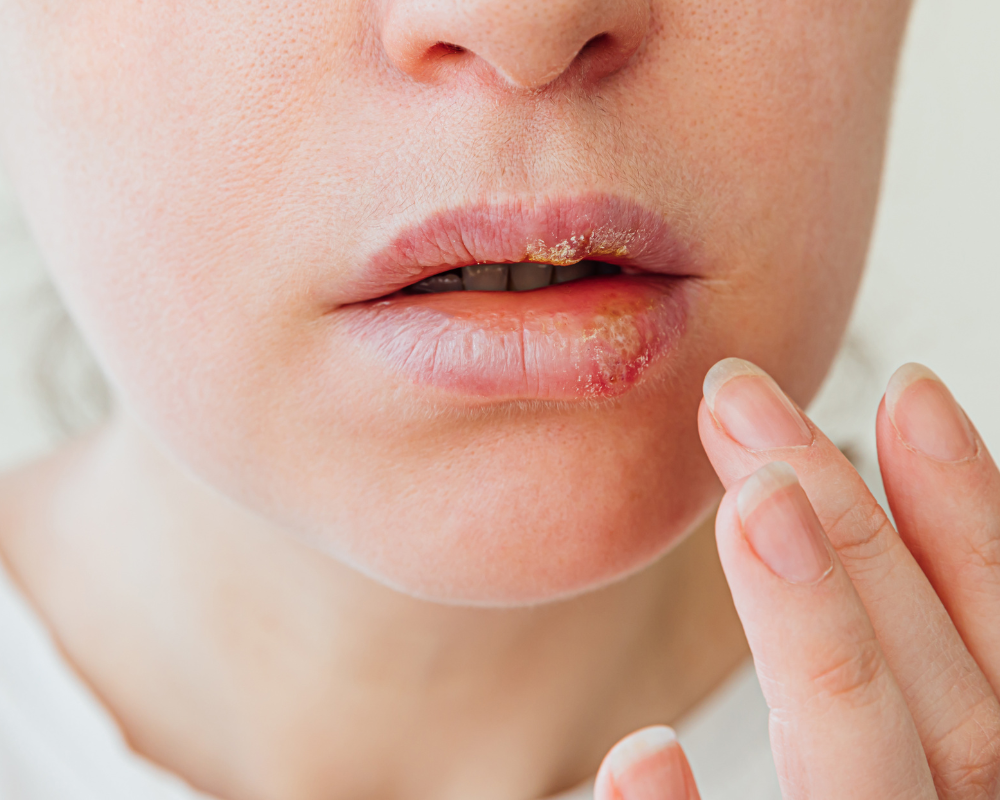
Have you felt tingling, burning or itching in a specific area of your lip?
These may be the first signs of a cold sore, even when no visible blister is present. At this stage, the virus may already be active, and the lesion may develop over the following hours.
Recognising your usual pattern allows you to seek advice and begin the appropriate treatment earlier. Although no treatment can guarantee that the blister will be completely prevented, acting at the first signs may help reduce discomfort and shorten the duration of the episode.
Sun exposure can also trigger new outbreaks in people who are predisposed. The beach, snow, mountains or spending several hours outdoors may encourage reactivation of the virus.
In this article, we explain how to recognise the first symptoms, what to do when you feel tingling in your lip and how to prevent episodes associated with sun exposure.
What are cold sores?
Cold sores are an infection caused, in most cases, by herpes simplex virus type 1, also known as HSV-1.
The most characteristic sign is the appearance of small clusters of blisters, usually on the lip or around its border. The area may cause pain, burning, itching or tenderness.
After the initial infection, the virus remains in the body. It may stay inactive for months or years and become active again later. This reactivation causes what is known as recurrent cold sores.
What can trigger a new outbreak?
Triggers are not the same for everyone. The most common include:
- intense sun exposure;
- fever or another infection;
- stress;
- tiredness;
- lack of sleep;
- hormonal changes;
- menstruation;
- exposure to cold weather;
- dry or cracked lips;
- irritation or minor injuries;
- reduced immune defences.
Keeping a record of the circumstances that occur before each episode may help identify patterns and prevent future recurrences.
What are the first symptoms of a cold sore?
Cold sores usually follow a relatively predictable sequence. For many people, the first warning sign is not the blister itself but a subtle change in sensation in the lip.
What is the prodromal phase?
The prodromal phase, also known as the prodrome, is the period before the blisters appear.
At this stage, the virus has already started to become active, although the skin may still look normal. Around 60% of people with recurrent episodes recognise these signs before the blisters appear.
The prodrome may last only a few hours. For this reason, anyone who has previously had cold sores should learn to recognise their usual pattern.
Signs that may appear before the blisters
The first symptoms of a cold sore may include:
- tingling in the lip;
- burning;
- itching;
- a stinging sensation;
- mild pain;
- tenderness to the touch;
- redness;
- a small hardened or warmer area;
- localised discomfort.
These symptoms tend to appear in the area where the lesion will develop. However, not everyone experiences a clear prodrome.
In addition, not every sore or change affecting the lips is caused by herpes. Mouth ulcers, cheilitis, contact dermatitis, cracks, impetigo and other conditions may have similar characteristics.
How does the lesion usually develop?
The most common progression includes the following stages:
- tingling, burning or itching;
- redness and local tenderness;
- the appearance of small fluid-filled blisters;
- the blisters breaking and forming a sore;
- the development of a scab;
- healing.
The speed of progression varies. In some people, the blisters appear only a few hours after the first symptoms. In others, they take longer to develop.
Most lesions gradually heal. However, their duration depends on the severity of the episode, the person’s health and when treatment is started.
Why are the first 12 hours of a cold sore important?
The expression “the first 12 hours decide everything” highlights how quickly a cold sore can develop. However, it does not mean that the lesion can be guaranteed to be prevented during this period.
Antiviral medicines work mainly while the virus is multiplying. This activity tends to be more intense at the beginning of the episode.
For this reason, topical treatments usually provide greater benefit when started during the tingling, burning or redness stage, before the blisters are fully developed.
When used appropriately, they may:
- reduce the duration of discomfort;
- slightly speed up healing;
- limit the progression of some lesions;
- reduce the severity of the episode in certain people.
However, results vary. Starting treatment early may help, but it does not guarantee that the blister will disappear immediately or that the lesion will be completely prevented.
What should you do when you first feel tingling in your lip?
When you recognise the first signs, take the following simple and organised steps:
- wash your hands;
- avoid touching or scratching the area;
- do not press or massage the lip;
- use the treatment previously recommended by a healthcare professional;
- seek advice from a pharmacist as soon as possible;
- keep the area clean and protected;
- avoid sharing objects that come into contact with the mouth;
- reduce sun exposure;
- apply a suitable lip sunscreen to areas without an open sore.
If you already have a prescribed treatment plan for recurrent episodes, follow your doctor’s instructions and consult the relevant patient information leaflet.
Avoid using medicines that were prescribed for someone else. The choice of treatment depends on age, health, the frequency of outbreaks, other medicines being used and whether the person is pregnant or breastfeeding.
What treatments can be used?
Treatment for cold sores may include topical or oral antiviral medicines, as well as measures intended to reduce pain and protect the skin.
The most appropriate option depends on the severity of the lesion, the frequency of recurrences and each person’s individual characteristics.
Topical antivirals
Topical antivirals are generally available as creams.
Aciclovir and penciclovir are among the active substances used to treat cold sores. Their availability and conditions of use may vary.
These products tend to provide greater benefit when application begins during the tingling, burning or redness stage.
When applying the cream:
- wash your hands before and after application;
- use only the recommended amount;
- gently press the product onto the area;
- avoid rubbing vigorously;
- avoid contact with the eyes;
- follow the application frequency stated in the patient information leaflet.
Oral antivirals
Medicines such as aciclovir, valaciclovir or famciclovir may be considered for severe, extensive or very frequent episodes.
These treatments require medical assessment. The dose and duration depend on the medicine and the person’s clinical characteristics.
For recurrent cases, a doctor may establish a plan that allows the medicine to be started as soon as the first symptoms appear.
People with frequent outbreaks or episodes that are predictably triggered by the sun may also need an individualised preventive strategy.
Measures to relieve discomfort
During healing, some simple measures may help:
- apply a cold compress for a few minutes;
- keep the lips moisturised;
- avoid acidic, salty or very spicy foods if they cause pain;
- drink fluids regularly;
- protect the lesion from friction;
- use a painkiller only when appropriate and after receiving professional advice.
In some cases, cold sore patches may help protect the area from contact and friction.
Avoid applying ice directly to the skin. You should also avoid alcohol, lemon, garlic, toothpaste and other irritating home remedies. These substances may worsen inflammation, cause pain and delay skin recovery.
Why does the sun trigger cold sores?
Intense sunlight is a known trigger for recurrent cold sores.
After the initial infection, the virus remains inactive in nerve structures near the face. Exposure to ultraviolet radiation may encourage its reactivation in people who are predisposed.
At the same time, ultraviolet radiation may temporarily alter the skin’s local defences.
For this reason, some people develop cold sores:
- after a day at the beach;
- during holidays involving intense sun exposure;
- after spending several hours outdoors;
- during activities in the mountains;
- while taking part in snow sports;
- after sun exposure without lip protection.
Snow and water reflect some ultraviolet radiation. Exposure may therefore be significant even when the temperature is low.
How can cold sores triggered by the sun be prevented?
When the sun is a usual trigger, prevention should begin before exposure.
Choose a suitable lip sunscreen
Use a lip sunscreen with:
- SPF 30 or higher;
- broad-spectrum protection;
- protection against UVA and UVB radiation;
- a comfortable texture that allows frequent reapplication.
Choose a product specifically formulated for the lips.
Also apply sunscreen to the skin around the mouth, as this area is exposed to radiation and may become irritated.
Apply and reapply it correctly
Apply the lip sunscreen before sun exposure.
Reapply it:
- after eating or drinking;
- after wiping your mouth;
- after swimming;
- after sweating;
- whenever you feel that the product has worn off;
- according to the instructions on the packaging.
Remember the corners of the lips and the skin immediately above and below the mouth.
A hat, shade and reduced exposure during the hours of strongest sunlight provide additional protection.
Prepare for holidays and outdoor activities
If you usually develop cold sores in summer or during activities in the snow, prepare before travelling.
Take the following with you:
- lip sunscreen;
- a suitable moisturising product;
- your usual treatment, if it has been recommended by a healthcare professional;
- information on how to start the treatment correctly;
- facial sunscreen.
Before travelling, speak to your pharmacist or doctor. Frequent, severe episodes or outbreaks that are clearly associated with the sun may justify an individualised preventive strategy.
Are cold sores contagious?
Yes. Cold sores can be transmitted through direct contact with the lesion, saliva or objects that have been in contact with the mouth.
The risk of transmission increases when active blisters or sores are present. However, the virus may also be passed to another person when the skin appears normal.
As a precaution, consider a cold sore contagious from the moment tingling begins until the skin has healed completely.
What precautions should you take during an episode?
During this period:
- avoid kissing;
- avoid oral sex;
- do not share lipsticks or lip balms;
- do not share cups, bottles or cutlery while they are being used;
- do not share towels;
- wash your hands after touching the area;
- avoid touching your eyes;
- wash your hands carefully before handling contact lenses.
Take particular care around babies. Herpes can cause serious complications in newborn babies. People with active lesions should not kiss babies.
Caution is also required around people with weakened immunity or extensive eczema.
What should you avoid when a cold sore appears?
Some behaviours may increase irritation, encourage transmission or delay healing.
Avoid:
- bursting the blisters;
- picking the scabs;
- repeatedly touching the lesion;
- scratching the area;
- touching your eyes after touching your lip;
- sharing personal items;
- applying alcohol, lemon, garlic or toothpaste;
- placing ice directly on the skin;
- using antibiotics without a clinical indication;
- applying make-up over an open sore;
- using someone else’s medicines;
- stopping a prescribed treatment without advice;
- ignoring a persistent lesion or one that is different from usual.
Antibiotics do not work against the herpes simplex virus. They should only be used when a bacterial infection has been diagnosed by a healthcare professional.
When should you see a doctor?
Most cold sore outbreaks improve without complications. However, some situations require medical assessment.
Seek help when:
- the lesion appears near the eye;
- you experience eye pain;
- your eye is red or watery;
- you have blurred vision;
- you are sensitive to light;
- the lesion is very extensive or painful;
- there are several sores inside the mouth;
- you have difficulty eating or drinking;
- you have a fever or feel severely unwell;
- the lesion does not begin to improve after around 10 days;
- the sore persists for more than two weeks;
- the episodes are very frequent;
- you have weakened immunity;
- you are receiving chemotherapy or immunosuppressive treatment;
- you have eczema and the lesions begin to spread;
- you are pregnant or breastfeeding and need medication;
- the affected person is a baby;
- you are not sure whether the lesion is a cold sore.
A herpes infection near the eye may require prompt treatment. Avoid touching your eyes and seek medical assessment if you develop eye symptoms.
In summary, cold sores can develop quickly. For many people, tingling, burning or itching is the first warning sign of a new outbreak.
Recognising these signs allows you to seek advice and begin the appropriate treatment earlier. The first few hours are important, but no treatment can guarantee that the lesion will be completely prevented.
Sun exposure can also reactivate the virus. For this reason, a lip sunscreen with SPF 30 or higher should form part of the daily care routine of anyone who experiences recurrences associated with the sun.
Do you usually develop cold sores after sun exposure? Speak to the Farmácia Aberta team and find out which precautions are most appropriate for your needs.
Frequently Asked Questions
1. What should I do if I first get tingling on my lip?
Wash your hands, avoid touching the affected area, and use the treatment recommended by a healthcare professional. Seek pharmaceutical advice as soon as possible, as antivirals tend to provide greater benefit when used at the onset of symptoms.
2. Can a cold sore appear in less than 12 hours?
Yes. In some people, blisters may appear a few hours after the tingling, burning, or itching. In others, the development takes longer.
3. Can the sun really trigger cold sores?
Yes. Ultraviolet radiation can promote the reactivation of the virus in predisposed individuals. Intense exposure at the beach, mountains, or snow is a frequent trigger.
4. What sunscreen should I use on my lips?
Choose a broad-spectrum lip balm with UVA and UVB protection and SPF 30 or higher. Reapply throughout the day and always after eating, drinking, or swimming.
5. Can I pop the blisters from a cold sore?
Avoid bursting the blisters. This can irritate the skin, facilitate a bacterial infection, and spread the virus to other areas.
6. How long is a cold sore contagious?
The risk exists from the first ant infestation until complete healing. Transmission becomes more likely when there are blisters, wounds, or fluid in the lesion.
7. Can I kiss someone when I have a cold sore?
You should avoid kissing while there are symptoms or lesions. You should also avoid oral sex until the skin has completely healed.
8. Do cold sores go away on their own?
Many episodes begin to improve within about 10 days. Still, early treatment can reduce discomfort and slightly speed up healing.
9. When should I see a doctor?
Seek medical attention if the lesion is extensive, very painful, recurrent, near the eyes, or persistent. People with weakened immune systems, pregnant women, babies, and those with eczema should pay special attention.
Bibliographic References
- Arduino PG, Porter SR. Oral and perioral herpes simplex virus type 1 (HSV-1) infection: review of its management. Oral Diseases. 2006;12(3):254-270. doi: 10.1111/j.1601-0825.2006.01202.x.
- Randall DA, Wilson Westmark NL, Neville BW. Common oral lesions. American Family Physician. 2022;105(4):369-376.
- Piperi E, Papadopoulou E, Georgaki M, et al. Management of oral herpes simplex virus infections: the problem of resistance. A narrative review. Oral Diseases. 2024;30(3):877-894. doi: 10.1111/odi.14635.
- Slots J. Oral viral infections of adults. Periodontology 2000. 2009;49:60-86. doi: 10.1111/j.1600-0757.2008.00279.x.
- Rooney JF, Bryson Y, Mannix ML, et al. Prevention of ultraviolet-light-induced herpes labialis by sunscreen. The Lancet. 1991;338(8780):1419-1422. doi: 10.1016/0140-6736(91)92723-F.
- World Health Organization. Herpes simplex virus.
- American Academy of Dermatology Association. Cold sore remedies dermatologists recommend.
- NHS. Cold sores: symptoms, causes, treatment and when to seek help.
- NHS. Neonatal herpes: herpes infection in a baby.


