
- Your cart is empty
- Continue Shopping
Hair loss after weight loss: What is telogen effluvium?
- Hair Health
- Posted on
-
by farmbert
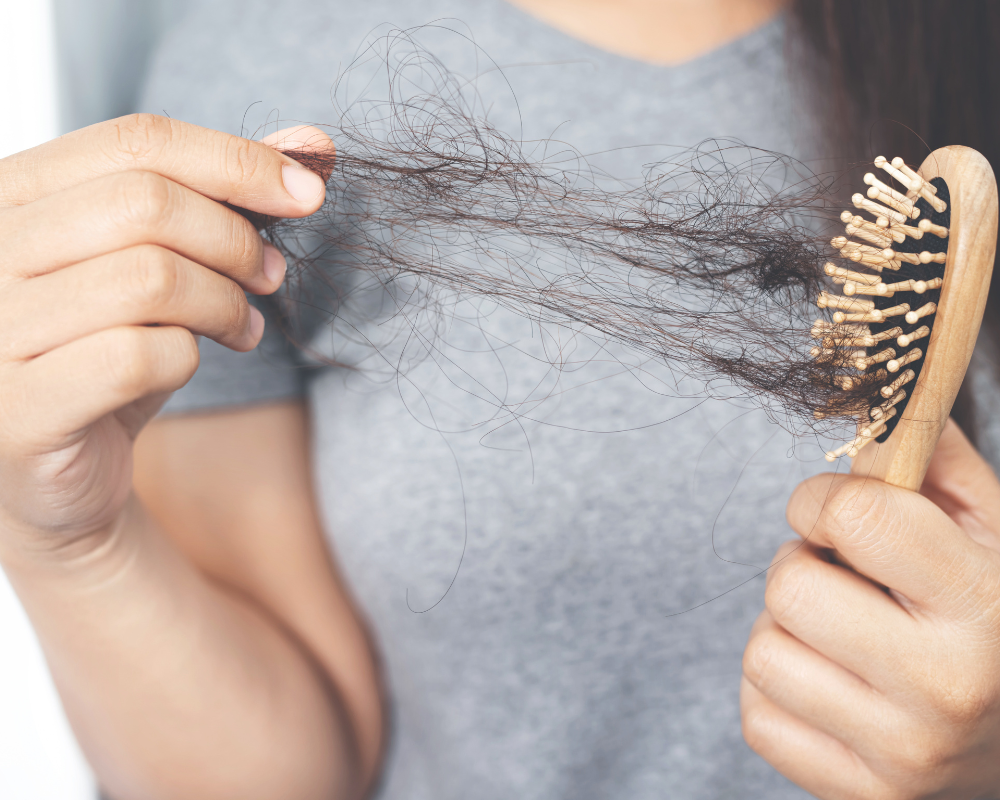
Have you lost weight and started noticing more hair in the shower, on your brush or on your pillow? This change may be related to weight loss, especially when the weight loss was rapid, resulted from a highly restrictive diet or was associated with an insufficient intake of energy and nutrients.
One possible explanation is telogen effluvium, a form of diffuse hair shedding in which more hairs than usual enter the resting phase. Hair shedding may only become noticeable two to four months after the triggering event. By then, your weight may already have stabilised, making it more difficult to establish a connection between the two situations.
However, not all hair loss after weight loss is caused by telogen effluvium. Iron deficiency, thyroid disorders, scalp conditions, genetic predisposition and certain medicines can also interfere with the hair growth cycle.
In summary: hair loss after losing weight may be temporary, but it is important to identify the cause. Supplements, shampoos and hair treatments should not replace a proper assessment.
This content is for informational purposes and does not replace an assessment by a doctor, dermatologist, dietitian or pharmacist.
What is telogen effluvium?
Hair goes through a natural cycle. Each follicle is in a different phase, which helps maintain relatively stable hair density.
Anagen or growth phase
This is the active growth phase. Most of the hair on the scalp is in this phase, which can last for several years.
Catagen or transition phase
This is a short phase. Growth slows down and the follicle prepares to enter the resting phase.
Telogen or resting phase
The hair stops growing and remains in the follicle for some time. It later sheds as a new hair begins to grow.
In telogen effluvium, a physical, metabolic, hormonal or nutritional change causes more follicles to enter the telogen phase prematurely. Because many hairs complete this phase at a similar time, the shedding becomes more noticeable.
Hair loss is usually distributed across the entire scalp. Rather than causing completely bald patches, it tends to cause an overall reduction in hair volume. It is generally a non-scarring form of hair loss, which means that the follicle is not destroyed.
Why can hair fall out after weight loss?
Weight loss does not cause hair loss in everyone. The risk may increase when the body undergoes a significant physical change or when the diet no longer provides enough energy, protein or micronutrients.
Rapid weight loss
A significant reduction in body weight over a short period can place considerable demands on the body. This change may temporarily interfere with the hair growth cycle and cause more follicles to enter the resting phase.
There is no specific amount of weight or rate of weight loss that causes hair loss in everyone. The response varies according to a person’s health, diet, age and other individual factors.
Severe calorie restriction
A diet that provides much less energy than the body needs may affect tissues with high levels of cellular activity, such as hair follicles.
Hair loss does not depend solely on the number of calories consumed. The composition of the diet, protein intake, nutritional status and hormonal changes may also have an influence.
Insufficient protein intake
Protein provides the amino acids needed to produce keratin, one of the main components of hair.
A highly restrictive diet may not provide enough protein, particularly when it excludes several food groups or replaces complete meals with poorly balanced options.
Requirements vary according to body weight, age, physical activity and health status. For this reason, a weight-loss plan should be adapted to each person.
Nutritional deficiencies
Several nutrients play an important role in hair health. The most relevant include:
- Iron;
- Vitamin D;
- Zinc;
- Vitamin B12;
- Folate;
- Protein.
This does not mean that everyone with telogen effluvium has a nutritional deficiency. It also does not mean that taking supplements will automatically resolve the hair loss.
Supplementation should address an identified need. Excessive amounts of certain nutrients may also cause unwanted effects and affect health.
You can browse the supplements section at Farmácia Aberta, but these products should be selected with appropriate professional advice.
Bariatric surgery
Hair loss may occur after bariatric surgery due to a combination of factors:
- Rapid weight loss;
- Reduced food intake;
- Changes in nutrient absorption;
- Insufficient protein intake;
- Vitamin or mineral deficiencies;
- Physical stress caused by surgery.
Follow-up with the medical and nutrition team is essential. The person should follow the prescribed dietary plan, supplementation programme and monitoring tests.
Weight-management medicines
Some people notice increased hair shedding during weight-management treatment. However, it should not automatically be assumed that the medicine is the only cause.
The assessment should take into account:
- The rate of weight loss;
- Reduced appetite;
- The quality of the diet;
- Protein intake;
- Nutritional status;
- The presence of other health conditions;
- The use of other medicines;
- A predisposition to other types of hair loss.
Do not stop or change any medicine without speaking to the doctor supervising your treatment.
How long after losing weight does hair loss begin?
Telogen effluvium does not usually begin immediately after starting a diet or losing weight.
Hairs that enter the resting phase remain in the follicle for some time before shedding. For this reason, hair loss usually becomes more noticeable around two to four months after the triggering event.
This interval may vary. Some people notice hair loss sooner, while others only identify the change several months later.
For example, someone who starts a highly restrictive diet in January may only notice more hair in the shower in March, April or May.
What are the main signs of telogen effluvium?
The most common signs include:
- Hair shedding across the entire scalp;
- More hair in the shower, on the brush or on the pillow;
- A general reduction in hair volume;
- A ponytail that appears thinner;
- No clearly defined bald patches;
- No scarring on the scalp;
- New hair growth during recovery.
There is no need to count the number of hairs that fall out each day. The amount varies according to hair length, washing frequency and individual habits.
A clear change compared with your usual pattern is more important than an isolated number.
How can telogen effluvium be distinguished from other types of hair loss?
Assessment by a healthcare professional is essential to identify the cause. Certain characteristics may help distinguish the main types of hair loss.
| Type of hair loss | Usual distribution | Progression | Appearance of the scalp |
|---|---|---|---|
| Telogen effluvium | Diffuse hair shedding | May occur after weight loss, illness, surgery or dietary restriction | Usually normal and without scarring |
| Androgenetic alopecia | Progressive hair loss in specific areas | Slow progression | The hairs gradually become thinner |
| Alopecia areata | Clearly defined patches | May occur suddenly | Smooth areas without hair |
| Hair breakage | Hairs broken at different lengths | May be associated with heat, chemicals or traction | Short, uneven hairs |
| Scalp condition | Variable distribution | Depends on the cause | Redness, itching or flaking may be present |
Telogen effluvium may also coexist with androgenetic alopecia. In these cases, diffuse shedding may make a pre-existing reduction in hair density more noticeable.
How is it diagnosed?
Diagnosis begins with an assessment of the symptoms, recent events and the condition of the scalp.
Medical history
The healthcare professional may ask about:
- The amount of weight lost;
- The rate of weight loss;
- The type of diet;
- Protein intake;
- Recent surgery;
- Illness, infection or fever;
- Recent childbirth;
- Menstrual changes;
- Medicines and supplements;
- Symptoms related to the thyroid;
- A family history of hair loss.
This information helps identify possible triggering factors during the previous months.
Scalp examination
The doctor or dermatologist assesses the distribution of hair loss, hair density, hair thickness and the presence of inflammation, flaking or scarring.
They may also perform a hair-pull test or use trichoscopy, an examination that allows the hair and scalp to be viewed under magnification.
Laboratory tests
The tests required depend on the medical history and symptoms. When indicated, the following may be assessed:
- Full blood count;
- Ferritin and iron studies;
- Thyroid function;
- Vitamin D;
- Vitamin B12;
- Folate;
- Zinc;
- Other nutritional or metabolic parameters.
Not everyone needs the same tests. The healthcare professional selects the tests according to each individual case.
Does the hair grow back?
Acute telogen effluvium tends to improve after the triggering factor disappears or is corrected.
The shedding phase may continue for several months. The amount of hair that falls out then tends to decrease.
Recovering hair volume takes longer because hair grows slowly. An improvement in density may become visible over six to nine months, although the timeframe varies.
Recovery may take longer when:
- The triggering factor persists;
- Nutritional deficiencies are present;
- The diet remains highly restrictive;
- Another form of alopecia is present;
- An associated hormonal or metabolic condition exists.
Hair loss that lasts for more than six months should be assessed by a healthcare professional.
What should you do if you experience hair loss after losing weight?
The approach should focus on identifying the cause and correcting the factors that may interfere with the hair growth cycle.
Review the weight-loss plan
A weight-loss plan should meet the person’s energy and nutritional needs.
Extreme diets increase the risk of an insufficient intake of protein, vitamins and minerals. They may also be difficult to maintain and negatively affect a person’s relationship with food.
Maintain a balanced diet
According to individual needs, the diet should include:
- Sources of protein;
- Pulses;
- Vegetables;
- Fruit;
- Cereals or starchy vegetables;
- Iron-rich foods;
- Sources of healthy fats;
- An adequate amount of water.
A balanced diet does not resolve every cause of hair loss, but it can help prevent or correct nutritional factors.
Seek professional support
A doctor or dermatologist can assess the cause of the hair loss. A dietitian can analyse energy and nutrient intake. A pharmacist can review medicines and supplements, identify possible duplication and refer the person to the most appropriate healthcare professional.
Farmácia Aberta provides follow-up and advice services that may help you determine the next step.
Correct identified deficiencies
Iron, vitamin D, zinc and vitamin B12 should only be supplemented when there is an appropriate indication.
The choice should take into account:
- The person’s usual diet;
- Test results;
- The required dose;
- The duration of supplementation;
- Other supplements;
- Medicines being used;
- Existing health conditions.
Taking several supplements at the same time may lead to duplicated nutrients.
Adopt gentle hair-care practices
During the shedding phase:
- Avoid very tight hairstyles;
- Reduce the use of hair straighteners and heated styling tools;
- Do not brush the hair forcefully;
- Detangle the hair carefully;
- Use products suited to your scalp;
- Maintain your usual hair-washing frequency.
Washing your hair does not cause telogen effluvium. The hairs seen in the shower were already in the shedding phase.
You can browse the hair-care products available at Farmácia Aberta. However, shampoos and lotions cannot, on their own, correct a nutritional or hormonal cause.
Do hair supplements help?
Supplements may be useful when there is a nutritional deficiency or another specific indication.
A person with iron deficiency may benefit from correcting that deficiency. However, taking iron when it is not needed does not necessarily provide benefits and may cause adverse effects.
The same principle applies to vitamin D, zinc, vitamin B12 and biotin.
Biotin should not automatically be taken for every type of hair loss. High doses may also interfere with certain laboratory test results.
Before starting a supplement:
- Check the ingredients;
- Check the doses;
- Avoid duplicating nutrients;
- Consider possible interactions;
- Ask a doctor or pharmacist for advice.
Is minoxidil necessary?
Minoxidil is not automatically required for acute telogen effluvium.
The priority is to identify and correct the triggering factor. In most acute cases, hair loss tends to improve without a specific treatment to stimulate growth.
A healthcare professional may consider minoxidil when androgenetic alopecia, persistent loss of density or another diagnosis justifies its use. This medicine is better established for the treatment of androgenetic alopecia than for acute telogen effluvium.
Do not start treatment based solely on a suspected case of telogen effluvium.
When should you see a doctor?
Seek medical assessment if you experience:
- Very severe hair loss;
- Hair loss lasting more than six months;
- Clearly defined bald patches;
- Loss of eyebrows or eyelashes;
- Pain or severe itching;
- Redness;
- Significant flaking;
- Wounds or scars on the scalp;
- Severe fatigue;
- Pale skin;
- Menstrual changes;
- Symptoms related to the thyroid;
- Suspected nutritional deficiency;
- A significant emotional impact.
Unintentional weight loss requires particular attention. If you have lost weight without changing your diet or physical activity, seek medical assessment to identify the cause.
How can hair loss during weight loss be prevented?
Not all cases can be prevented. However, certain measures can help reduce the risk factors:
- Avoid extreme diets;
- Avoid eliminating food groups without professional guidance;
- Ensure an adequate protein intake;
- Follow a weight-loss plan adapted to your needs;
- Attend follow-up appointments after bariatric surgery;
- Have tests performed when recommended by a healthcare professional;
- Do not combine several supplements without advice;
- Tell your doctor about any changes that occur during treatment;
- Seek nutritional support when necessary.
The aim should not be limited to losing weight. The process should protect health and ensure that the body receives sufficient energy and nutrients.
In conclusion, hair loss after losing weight may be related to telogen effluvium, particularly after rapid weight loss, a highly restrictive diet or a change in nutritional status.
The shedding usually begins several months later and is distributed across the entire scalp. After the triggering factor is corrected, hair loss tends to decrease gradually. Recovering hair volume, however, takes time.
There is no universal supplement for hair loss. Before starting any product, it is important to assess the diet, nutritional status, medicines and other possible causes.
Have you recently lost weight and started noticing more hair in the shower or on your brush? Contact the Farmácia Aberta team for pharmaceutical advice and help determining the most appropriate next step.
Frequently Asked Questions
1. Can weight loss cause hair loss?
Yes, it can. Rapid weight loss, a very restrictive diet, or a nutritional deficiency can trigger telogen effluvium. However, there are also other causes of hair loss.
2. How long after losing weight does the hair loss begin?
Hair loss typically begins two to four months after the triggering event. This timeframe can vary.
3. Does telogen effluvium leave bald patches?
Usually not. Hair loss tends to spread throughout the scalp and causes an overall reduction in volume.
4. How long does it take for hair to grow back?
Hair loss can last for several months. Visible recovery of density may take six to nine months or more, depending on the cause.
5. Should I take vitamins for hair loss?
Vitamins should not be taken automatically. Supplementation should address an identified need and take into account diet, medications, and test results.
6. Can iron deficiency cause hair loss?
Yes. Iron deficiency can contribute to hair loss. Evaluation may include a complete blood count, ferritin levels, and other iron-related parameters.
7. Does minoxidil help with telogen effluvium?
It is not necessary in all cases. It may be considered when another form of alopecia exists or when a healthcare professional identifies an indication for it.
8. When should I see a dermatologist?
See a dermatologist if hair loss is severe, lasts more than six months, causes bald patches, or is accompanied by pain, inflammation, itching, or flaking.
Bibliographic References
- Dakkak M, Forde KM, Lanney H. Hair loss: diagnosis and treatment. American Family Physician. 2024;110(3):243-250.
- Mirmirani P, Fu J. Diagnosis and treatment of nonscarring hair loss in primary care in 2021. JAMA. 2021;325(9):878-879. doi: 10.1001/jama.2020.19313.
- Goette DK, Odom RB. Alopecia in crash dieters. JAMA. 1976;235(24):2622-2623. doi: 10.1001/jama.1976.03260500038026.
- Kang DH, Kwon SH, Sim WY, Lew BL. Telogen effluvium associated with weight loss: a single-center retrospective study. Annals of Dermatology. 2024;36(6):384-388. doi: 10.5021/ad.24.043.
- Guo EL, Katta R. Diet and hair loss: effects of nutrient deficiency and supplement use. Dermatology Practical & Conceptual. 2017;7(1):1-10. doi: 10.5826/dpc.0701a01.
- Asghar F, Shamim N, Farooque U, et al. Telogen effluvium: a review of the literature. Cureus. 2020;12(5):e8320. doi: 10.7759/cureus.8320.
- Hughes EC, Syed HA, Saleh D. Telogen effluvium. StatPearls. StatPearls Publishing; 2024. Disponível em: https://www.ncbi.nlm.nih.gov/books/NBK430848/
- British Association of Dermatologists. Telogen effluvium. Atualizado em outubro de 2025. Disponível em: https://www.bad.org.uk/pils/telogen-effluvium
- DermNet New Zealand Trust. Telogen effluvium. Disponível em: https://dermnetnz.org/topics/telogen-effluvium


