
- Your cart is empty
- Continue Shopping
Dry eye caused by screens: Are artificial tears enough?
- Eye Health
- Posted on
-
by farmbert
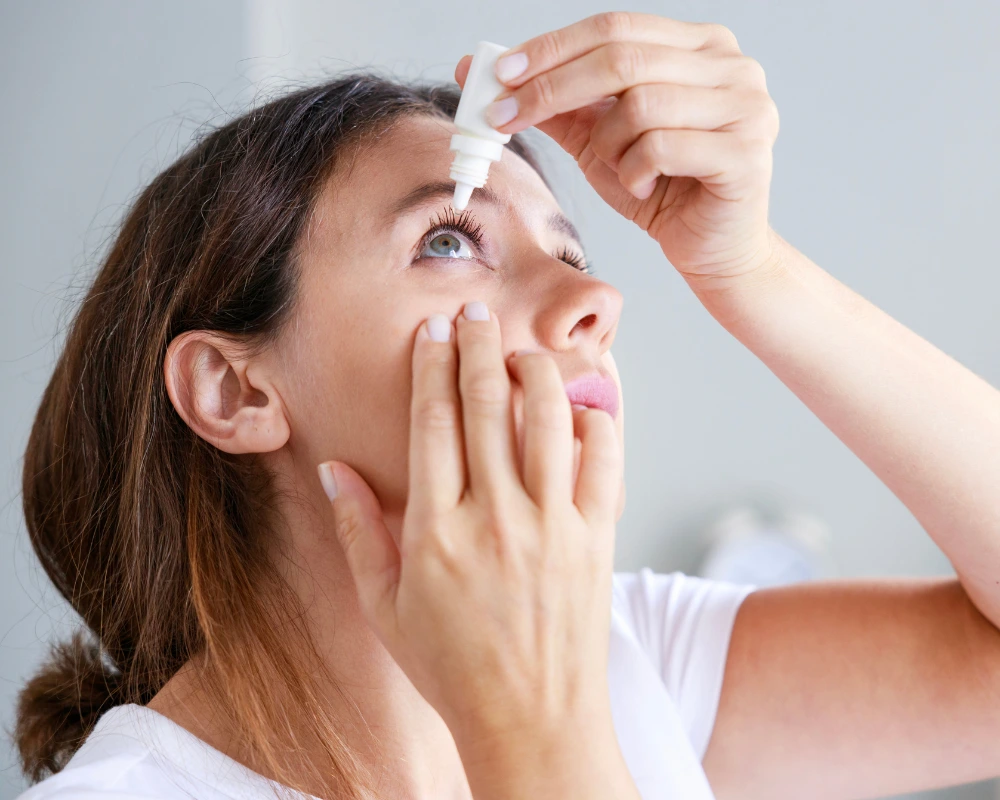
Spending several hours in front of a computer, checking your mobile phone throughout the day, or studying on a tablet can leave your eyes dry and irritated. Some people experience burning. Others notice a gritty sensation, redness, watery eyes, or temporarily blurred vision.
These symptoms are part of the discomfort commonly associated with digital eye strain. When using screens, we tend to blink less often and less completely. As a result, tears evaporate more quickly and the surface of the eye becomes less protected.
In most mild and occasional cases, changes in habits and a suitable artificial tear product may be enough. However, not all eye discomfort is caused solely by screens. Persistent symptoms, pain, or changes in vision require professional assessment.
At Farmácia Aberta, you can find different eye-care solutions, although the choice should take into account your symptoms, frequency of use, and whether you wear contact lenses.
What is screen-related dry eye?
The front of the eye is covered by a very thin layer called the tear film. This layer is renewed every time we blink and performs several functions:
- lubricates the surface of the eye;
- reduces friction from the eyelids;
- helps maintain clear vision;
- protects the cornea and conjunctiva;
- contributes to defence against microorganisms and particles.
The tear film contains water, lubricating substances, mucins, and lipids produced by different structures in the eyes and eyelids. The lipid component mainly helps limit evaporation.
When we focus closely on a screen, our blinking rate may decrease. In addition, some blinks do not close the eyelids completely. Under these conditions, tears are distributed less effectively and remain exposed to the air for longer, which promotes tear-film instability and evaporation.
The term “screen dry eye” is used informally but does not refer to a separate clinical diagnosis. The more technically accurate terms are digital eye strain or ocular discomfort associated with digital device use. Dry eye may be one component, alongside focusing difficulties, visual fatigue, or headaches.
Why can screens cause dry eyes?
Reduced blinking is one of the main mechanisms. However, discomfort often results from a combination of several factors.
The most common include:
- prolonged periods of screen use without breaks;
- incomplete blinking;
- a monitor positioned too high;
- unsuitable viewing distance or font size;
- excessive brightness, glare, and reflections;
- air conditioning, heating, or fans directed towards the face;
- low environmental humidity;
- prolonged contact lens use;
- exposure to smoke, dust, or pollution;
- insufficient sleep.
Age, hormonal changes, blepharitis, Meibomian gland dysfunction, and other ocular surface conditions can also increase the tendency to develop dry eye. Some medicines, including certain antihistamines, antidepressants, and diuretics, may also contribute. Never stop taking prescribed medication without medical advice.
The screen is therefore not always the sole cause. It often aggravates a pre-existing condition that had not yet caused noticeable symptoms.
What are the most common symptoms?
Symptoms may develop after a few hours of work and become worse towards the end of the day. They may also improve temporarily after blinking, resting, or moving away from the screen.
The most common complaints include:
- dryness or discomfort;
- burning or stinging;
- a gritty sensation or feeling of a foreign body;
- tired or heavy eyes;
- redness;
- blurred vision that improves after blinking;
- increased sensitivity to light;
- difficulty keeping contact lenses comfortable;
- excessive tearing.
Excessive tearing may seem contradictory. However, an irritated eye may produce watery tears as a reflex. These tears do not always have the composition or stability needed to lubricate the ocular surface properly.
Mild, temporary symptoms affecting both eyes are generally less concerning. Pain, persistent changes in vision, discharge, marked redness, or symptoms affecting only one eye require assessment.
When may artificial tears be enough?
Artificial tears may be a reasonable option when:
- symptoms are mild or occasional;
- they mainly develop after screen use;
- they improve with breaks, blinking, and rest;
- there is no severe eye pain;
- there is no loss of vision or persistent change in vision;
- there is no purulent discharge;
- there has been no injury or contact with chemicals;
- symptoms are not progressively worsening.
These products supplement the tear film and temporarily reduce friction and discomfort. However, they do not necessarily correct the underlying cause. For example, an artificial tear may relieve irritation caused by Meibomian gland dysfunction, but this condition may require eyelid hygiene or another treatment recommended by a healthcare professional.
How do artificial tears work?
Artificial tears are designed to hydrate, lubricate, or stabilise the tear film. Some act mainly on its aqueous component. Others help reduce evaporation or protect the cells on the surface of the eye.
Common active ingredients include:
- hyaluronic acid or sodium hyaluronate, which have hydrating and viscoelastic properties;
- carmellose sodium, a lubricant that helps the solution remain in the eye for longer;
- hypromellose, also known as hydroxypropyl methylcellulose, which increases viscosity;
- povidone, used as a lubricant;
- trehalose and ectoine, described as osmoprotective agents;
- lipid components, designed to strengthen protection against evaporation.
The concentration of an active ingredient, viscosity, presence of lipids, and preservation system can be just as important as the name of the ingredient itself. In addition, current studies do not allow us to conclude that one active ingredient is always the best choice for everyone.
Artificial tears with or without preservatives?
Preservatives help limit contamination in multi-dose bottles after opening. However, certain preservatives may increase irritation in sensitive eyes, particularly with frequent or prolonged exposure.
There are four main formats:
Multi-dose bottles with preservatives
These are practical and may be suitable for occasional use. Tolerance depends on the preservative, frequency of application, and condition of the ocular surface.
Multi-dose bottles with specific preservation systems
Some formulations use preservatives designed to break down after application or systems intended to reduce exposure of the ocular surface. However, they are not equivalent to all preservative-free products.
Preservative-free unit-dose vials
These may be useful for sensitive eyes or when frequent use is required. Once opened, they should be used and discarded according to the manufacturer’s instructions.
Preservative-free multi-dose bottles
These use valves, filters, or other mechanisms designed to prevent contamination of the contents without adding preservatives to the solution.
Preservative-free formulations may be particularly relevant for people with ocular sensitivity, moderate or severe ocular surface disease, prolonged use, the need for several applications throughout the day, or contact lens use. However, the choice should always be individualised.
Aqueous artificial tears or products with a lipid component?
The choice partly depends on whether dryness is mainly related to insufficient hydration or excessive evaporation.
| Type of product | When it may be useful | Advantages | Possible limitations | Contact lenses |
|---|---|---|---|---|
| Low- or medium-viscosity aqueous artificial tears | Mild and occasional symptoms | Generally comfortable during the day and cause little blurring | May require more frequent reapplication | Only when the packaging states that the product is compatible |
| Formulation with a lipid component | Evaporative dry eye or suspected Meibomian gland dysfunction | May help reduce evaporation | Some emulsions cause temporary blurring | Always check the manufacturer’s instructions |
| Lubricating gel | More persistent symptoms or when longer retention is needed | Remains on the ocular surface for longer | May temporarily blur vision | Usually applied after removing contact lenses |
| Ophthalmic ointment | Selected situations, particularly at night | Provides prolonged lubrication | Thicker and causes blurred vision | Must not be used while contact lenses are in place |
More viscous products are not necessarily “stronger”. They remain in the eye for longer but may temporarily reduce visual clarity. For this reason, gels and ointments are often reserved for rest periods or night-time use, following professional advice.
How should artificial tears be applied correctly?
- Wash and dry your hands thoroughly.
- Tilt your head slightly backwards.
- Look upwards and gently pull down the lower eyelid.
- Apply the recommended amount into the space created by the lower eyelid, without allowing the tip of the bottle to touch the eye, eyelashes, or skin.
- Close your eye gently for a few seconds without squeezing your eyelids.
- Wipe away any excess with a clean tissue or compress.
- Follow the storage conditions and use-by period after opening.
- Do not share the product with anyone else.
The frequency of use depends on the formulation, the manufacturer’s instructions, and the advice of a healthcare professional. There is no universal frequency suitable for every artificial tear product.
Can artificial tears be used with contact lenses?
Not all products can be used with contact lenses. Some formulations are designed to be applied while the lenses are in place, while others require their removal.
Before using a product:
- confirm compatibility on the packaging or patient information leaflet;
- check whether it can be applied directly onto the lenses;
- follow the recommended waiting period before reinserting the lenses;
- do not use eye drops solely because they are described as “lubricating”.
Remove your contact lenses and seek advice if you experience pain, severe redness, discharge, marked sensitivity to light, or changes in vision. A red, painful eye in a contact lens wearer may indicate an infection that requires prompt assessment.
Other measures to relieve screen-related dry eye
Artificial tears work best when combined with measures that correct the factors causing or aggravating the symptoms.
Take regular breaks
The 20-20-20 rule recommends looking at an object around 20 feet, or approximately six metres, away for at least 20 seconds every 20 minutes.
This break relaxes focusing effort and creates an opportunity to blink. A study of this strategy found a reduction in symptoms of digital eye strain and dry eye, although breaks should form part of a broader set of measures.
Improve blinking and ergonomics
- Blink consciously and make sure your eyelids close completely.
- Position the monitor slightly below eye level.
- Keep the screen at a comfortable distance, approximately one arm’s length away.
- Increase the font size to avoid moving too close to the screen.
- Reduce reflections and adjust brightness to suit the surrounding environment.
- Alternate digital tasks with activities that do not involve screens.
Also avoid air currents directed towards the eyes and consider improving humidity in the room. Get enough sleep and reduce unnecessary device use during rest periods.
Warm compresses may be helpful for some people with Meibomian gland dysfunction. However, the technique, temperature, and frequency should be professionally recommended, particularly in cases involving inflammation, eyelid disease, or previous eye surgery.
Blue-light filters may alter comfort or the perception of glare under certain conditions. However, current evidence does not show a consistent, clinically meaningful benefit in treating digital eye strain or dry eye. They should not replace regular breaks, complete blinking, or ergonomic adjustments.
When are artificial tears not enough?
Seek advice from a pharmacist, optometrist, doctor, or ophthalmologist when:
- symptoms persist despite self-care measures;
- you need to apply artificial tears repeatedly every day;
- the problem returns frequently;
- discomfort interferes with reading, working, or driving;
- there is eye pain;
- sensitivity to light is severe;
- vision remains blurred or altered;
- redness is marked;
- there is discharge;
- only one eye remains affected;
- the sensation of a foreign body does not disappear;
- you wear contact lenses and experience pain, redness, or changes in vision;
- you have a history of eye surgery or ocular disease.
An assessment may identify blepharitis, allergy, infection, inflammation, Meibomian gland dysfunction, or another condition. Treatment may include eyelid hygiene, allergy management, treatment of inflammation, or prescription medicines.
Warning signs: when to seek urgent help
Do not treat the problem with artificial tears alone. Seek urgent medical assessment if you experience:
- sudden loss of vision or a significant change in vision;
- severe eye pain;
- a very red and painful eye;
- severe sensitivity to light;
- an eye injury or perforation;
- contact with chemical products;
- the presence or suspected presence of a foreign body;
- headache, nausea, or vomiting associated with eye symptoms;
- suspected infection in a contact lens wearer.
If the eye comes into contact with a chemical substance, immediately rinse it thoroughly with clean water and seek urgent medical assistance.
In summary, artificial tears may be enough when screen-related dry eye causes mild, occasional symptoms without warning signs. For better results, they should be combined with regular breaks, complete blinking, correct monitor positioning, and improved environmental conditions.
However, an artificial tear is not a universal solution. Severe or persistent symptoms, or symptoms accompanied by pain or changes in vision, require individual assessment.
Do you have symptoms of dry eyes and are unsure which artificial tear product is most suitable? Ask the Farmácia Aberta team for advice.
Frequently Asked Questions
1. Can artificial tears be used every day?
Some can be used daily, provided they are suitable for the individual and used according to instructions. However, the need for frequent or prolonged applications should be discussed with a professional, especially to assess the cause and the presence of preservatives.
2. Do artificial tears cause addiction?
They do not cause dependence in the pharmacological sense. If the symptoms return when you stop using them, this usually indicates that the factor responsible for the dryness is still present.
3. Can I use any eye drops for dry eyes?
No. Antibiotic, anti-allergy, anti-inflammatory, or vasoconstrictor eye drops have different indications. The word “eye drops” only describes the method of application and not the purpose of the product.
4. What is the difference between artificial tears and eye drops for redness?
Artificial tears lubricate or stabilize the tear film. Some eye drops for redness temporarily constrict blood vessels and do not treat dryness. Their indiscriminate use can mask the cause of the redness.
5. How long does it take to feel relief?
Relief may begin shortly after application, but intensity and duration vary. If the product causes persistent burning, worsens symptoms, or provides no benefit, seek advice.
6. When should I see an ophthalmologist?
If you experience persistent symptoms, pain, vision changes, marked redness, intense sensitivity to light, unilateral symptoms, or discomfort associated with contact lenses, an evaluation is recommended. An evaluation is also advised when the problem interferes with daily activities.
Bibliographic References
- Jones L, Craig JP, Markoulli M, et al. TFOS DEWS III Management and Therapy Report. American Journal of Ophthalmology. 2025. doi: 10.1016/j.ajo.2025.05.039.
- Stapleton F, Argüeso P, Asbell P, et al. TFOS DEWS III Digest Report. American Journal of Ophthalmology. 2025;279:451-553.
- Wolffsohn JS, Lingham G, Downie LE, et al. TFOS Lifestyle: Impact of the digital environment on the ocular surface. The Ocular Surface. 2023;28:213-252. doi: 10.1016/j.jtos.2023.04.004.
- Alves M, Asbell P, Dogru M, et al. TFOS Lifestyle Report: Impact of environmental conditions on the ocular surface. The Ocular Surface. 2023;29:1-52. doi: 10.1016/j.jtos.2023.04.007.
- Pucker AD, Ng SM, Nichols JJ. Over-the-counter artificial tear drops for dry eye syndrome. Cochrane Database of Systematic Reviews. 2016;2. doi: 10.1002/14651858.CD009729.pub2.
- Mysen OMB, Hynnekleiv L, Magnø MS, et al. Review of Hydroxypropyl Methylcellulose in Artificial Tears for the Treatment of Dry Eye Disease. Acta Ophthalmologica. 2024;102:881-896. doi: 10.1111/aos.16753.
- Singh S, Keller PR, Busija L, et al. Blue-light filtering spectacle lenses for visual performance, sleep, and macular health in adults. Cochrane Database of Systematic Reviews. 2023;8. doi: 10.1002/14651858.CD013244.pub2.
- Talens-Estarelles C, Cerviño A, García-Lázaro S, et al. The effects of breaks on digital eye strain, dry eye and binocular vision: testing the 20-20-20 rule. Contact Lens and Anterior Eye. 2023. doi: 10.1016/j.clae.2022.101744.
- NHS. Dry eyes: symptoms, causes, self-care and when to seek help.
- American Academy of Ophthalmology. Computers, digital devices and eye strain; contact lens care.


