
- Your cart is empty
- Continue Shopping
Dandruff or seborrheic dermatitis: how to distinguish and treat it?
- Hair Health
- Posted on
-
by farmbert
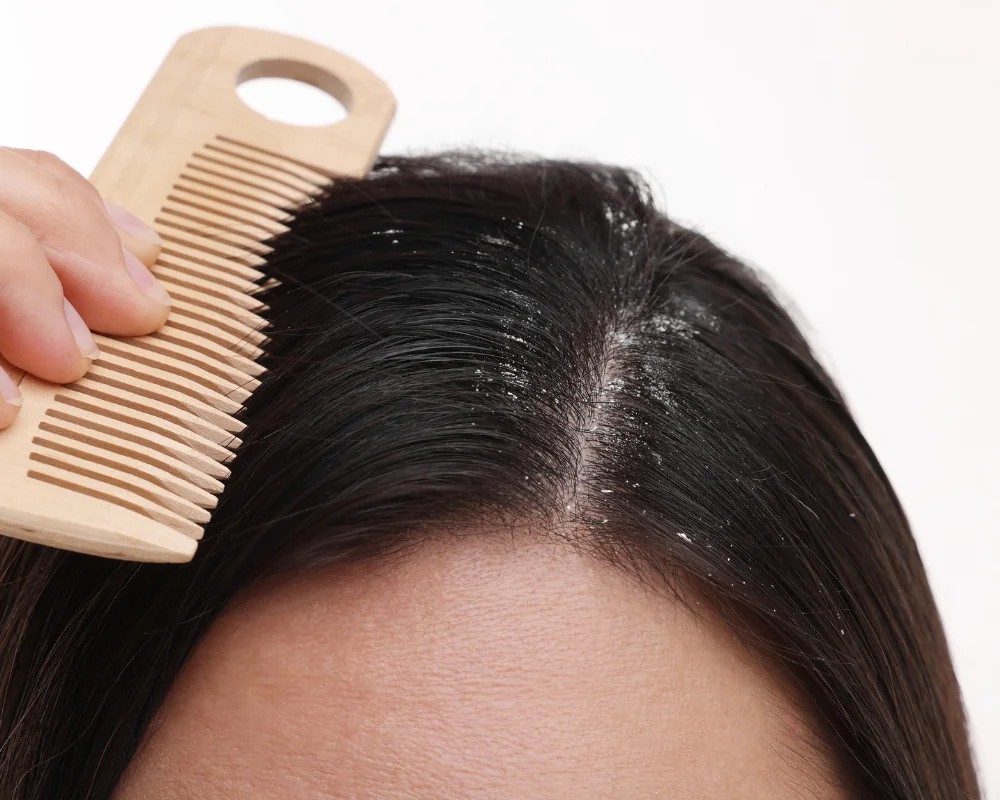
Finding flakes in your hair, on your clothes or over your shoulders is common. However, not all scalp flaking has the same cause.
In some cases, it is mild dandruff, with loose flakes and little inflammation. In others, the scalp is red, the itching is more intense, or there is irritation or lesions on the eyebrows, beard or sides of the nose. These signs may be consistent with seborrheic dermatitis or another skin condition.
Observing the appearance of the flakes, the presence of redness and the areas affected may help you understand the problem. Even so, these signs are not enough to establish a definitive diagnosis without a clinical assessment.
What is dandruff?
Dandruff is characterized by the visible shedding of small flakes from the outermost layer of the scalp. Mild to moderate itching may occur, but marked inflammation is generally absent.
The flakes may have different appearances:
- In so-called dry dandruff, they tend to be small, white or grayish and come away easily.
- In oily dandruff, they may be larger, more adherent and mixed with the scalp’s natural oils.
The skin is constantly renewing itself. When this process becomes faster or when surface cells clump together, the flakes become more visible.
In addition, oil production, the condition of the skin barrier and the activity of yeasts from the genus Malassezia may contribute to the problem. These yeasts are microorganisms that normally live on human skin, particularly in areas rich in sebaceous glands.
Having dandruff does not necessarily mean that a person has poor hygiene. Inadequate washing may promote the accumulation of oil, dead skin cells and hair products, but it is not the only cause.
What is seborrheic dermatitis?
Seborrheic dermatitis is an inflammatory skin condition that is usually chronic and recurrent. This means that it may improve for some time and then return during certain periods.
It mainly affects areas rich in sebaceous glands, including:
- Scalp;
- Eyebrows;
- Sides of the nose;
- Hairline;
- Eyelids;
- Inside and behind the ears;
- Beard and mustache;
- Center of the chest;
- Certain skin folds.
The most common symptoms include redness, itching, irritation, and white, yellowish or oily-looking flakes.
In people with darker skin, inflammation may not appear as intense redness. Instead, lighter, darker or purplish areas may develop.
Are dandruff and seborrheic dermatitis the same condition?
Dandruff is often described as a milder condition limited to the scalp, with little or no visible inflammation.
Seborrheic dermatitis tends to cause more noticeable inflammatory signs, such as redness, irritation, and oily or adherent flakes. It may also affect the face, ears, beard, chest and other areas rich in sebaceous glands.
However, the terminology is not completely consistent. Some sources consider dandruff to be a mild form of seborrheic dermatitis, while others use the terms separately.
For this reason, it is more useful to assess the full range of symptoms, their location and how the condition develops than to rely solely on the name used.
Dandruff or seborrheic dermatitis: key differences
| Feature | Dandruff | Seborrheic dermatitis |
|---|---|---|
| Flaking | Usually white or grayish | May be white, yellowish or oily |
| Redness | Absent or mild | More common |
| Itching | Mild to moderate | May be more intense |
| Inflammation | Not very noticeable | Usually present |
| Areas affected | Mainly the scalp | Scalp and other seborrheic areas |
| Course | May occur occasionally | Tends to be chronic and recurrent |
| Medical assessment | Not always necessary | May be necessary in persistent or widespread cases |
This table is intended as general guidance only. Symptoms may overlap, and other dermatological conditions may cause similar signs.
What are the causes?
There is no single cause of dandruff or seborrheic dermatitis. Current knowledge suggests that several factors interact:
- Sebum production and composition;
- Changes in the skin’s protective barrier;
- Accelerated renewal of surface skin cells;
- Individual inflammatory response;
- Activity of yeasts from the genus Malassezia;
- Balance of the scalp microbiota;
- Genetic predisposition;
- Hormonal influences;
- Environmental conditions.
Seborrheic dermatitis should not be explained solely by the presence of Malassezia. These yeasts are part of the skin’s normal flora. Individual susceptibility, the immune response and the condition of the skin barrier are also important.
Cold, dry weather, stress, fatigue, certain irritating hair products and an unsuitable washing routine may make the symptoms worse.
Seborrheic dermatitis is also more common in people with certain neurological conditions or immunosuppression. However, this association does not mean that most people with seborrheic dermatitis have a serious underlying disease.
Is seborrheic dermatitis contagious?
No. Seborrheic dermatitis is not contagious and is not caused by poor hygiene.
The condition is related to the interaction between oil production, the skin microbiota, the skin barrier and each person’s inflammatory response.
It is therefore not transmitted through physical contact or by using the same towels or accessories.
Even so, not sharing towels, brushes and combs remains good hygiene practice, as other scalp conditions, including certain fungal infections and head lice, can be transmitted.
Can stress cause dandruff?
Stress is not necessarily the direct cause of dandruff or seborrheic dermatitis. However, it may contribute to the onset or worsening of a flare-up in people who are predisposed.
Periods of increased stress may also affect sleep, sweating and personal hygiene routines. These changes may make symptoms more difficult to control.
There is no consistent evidence that a specific food is the main cause of seborrheic dermatitis. A balanced diet is important for overall health, but restrictive diets or supplements should not be presented as proven treatments.
How is the diagnosis made?
The diagnosis is primarily clinical. The doctor assesses the appearance and location of the lesions, how long the symptoms have been present and how they have developed.
In most cases, additional tests are not necessary. However, blood tests, skin scrapings, allergy tests or a biopsy may be performed when the presentation is unusual, very severe or does not respond to the expected treatment.
The differential diagnosis may include:
- Scalp psoriasis;
- Contact dermatitis;
- Atopic eczema;
- Scalp ringworm;
- Head lice;
- Dry scalp;
- Reactions to hair dyes or hair products;
- Bacterial infections;
- Other inflammatory skin conditions.
For example, well-defined plaques with thick, silvery scales may suggest psoriasis. Areas of localized hair loss, broken hairs or circular lesions may raise suspicion of a fungal infection.
Likewise, burning, swelling or irritation after using a hair dye or a new shampoo may indicate contact dermatitis.
How is dandruff treated?
First, a product should be selected according to the type of flaking and the degree of oiliness. A pharmacist can help interpret the symptoms, check the necessary precautions and explain how to use the product.
The main measures include:
- Washing the scalp at a frequency suited to the level of oiliness and the hair type;
- Applying the shampoo mainly to the roots;
- Massaging gently with the fingertips;
- Following the contact time stated on the packaging;
- Rinsing thoroughly;
- Continuing to use the product for the recommended period;
- Avoiding picking at the flakes or scratching with the fingernails;
- Temporarily reducing the use of hairsprays, styling sprays, hair dyes or other irritating products.
An anti-dandruff shampoo may need to be used several times before a noticeable improvement occurs. However, intense burning, increasing redness or worsening symptoms are reasons to stop using the product and seek professional advice.
Active ingredients used in anti-dandruff shampoos
The active ingredients used in anti-dandruff products are not all equivalent. The choice depends on the type of flakes, oiliness, inflammation, age and individual tolerance.
- Antifungal agents, such as ketoconazole or ciclopirox, help reduce the activity of yeasts associated with seborrheic dermatitis. Their availability and indication depend on the product classification and the applicable regulations.
- Selenium sulfide may help control Malassezia activity and excessive renewal of surface skin cells. It should be used according to the instructions, as it may cause irritation in some people.
- Piroctone olamine is used in several anti-dandruff cosmetic products because of its action on microorganisms and flaking.
- Salicylic acid, sulfur and other keratolytic ingredients help loosen and remove adherent flakes. However, they may dry out or irritate the skin when used excessively.
- Soothing or moisturizing ingredients may be useful when there is sensitivity or dryness. Even so, they do not replace treatment aimed at inflammation or yeast activity when this is necessary.
There is no single best dandruff shampoo for everyone. The most appropriate product depends on the characteristics of the scalp, the symptoms and individual tolerance.
How is seborrheic dermatitis treated?
Treatment for seborrheic dermatitis depends on the location and extent of the lesions and the severity of the inflammation.
It may include:
- Antifungal shampoos or creams;
- Keratolytic products to help remove the flakes;
- Soothing care and products that help repair the skin barrier;
- Topical anti-inflammatory medicines prescribed by a doctor;
- Maintenance treatments intended to reduce recurrences.
In mild to moderate cases affecting the scalp, an appropriate shampoo may be sufficient. When significant inflammation is present, a doctor may also prescribe a topical corticosteroid or another anti-inflammatory medicine for a limited period.
Corticosteroids should not be used repeatedly or for prolonged periods without supervision. Inappropriate use may cause adverse effects, including thinning of the skin.
How should an anti-dandruff shampoo be used correctly?
- Wet the hair and scalp thoroughly.
- Apply the product mainly to the roots, rather than only to the lengths of the hair.
- Massage gently with the fingertips, without using the fingernails.
- Leave it on for the amount of time stated on the packaging or recommended by a healthcare professional.
- Rinse thoroughly.
- Repeat the application only when recommended in the instructions.
- Continue using it at the recommended frequency for the necessary period.
- Once the symptoms are controlled, reduce use to a maintenance schedule only when this is stated on the packaging or recommended by a professional.
The contact time is important. Rinsing the product off immediately may prevent the active ingredient from working properly.
On the other hand, leaving the product on for longer than recommended does not necessarily increase its effectiveness and may promote irritation.
Can seborrheic dermatitis be permanently eliminated?
Seborrheic dermatitis in adults tends to be chronic and recurrent. Treatment may control inflammation, itching and flaking, but a permanent cure cannot be promised.
The aim is therefore to control flare-ups and extend periods without symptoms.
Some people need to use a maintenance shampoo. Others only need to treat occasional episodes. The frequency should be adapted to the product and to the healthcare professional’s recommendation.
What can make the symptoms worse?
The factors vary from person to person. Those most commonly described include:
- Stress and fatigue;
- Sleep deprivation;
- Cold, dry weather;
- Heavy sweating;
- Accumulation of sebum or hair products;
- Irritating shampoos, hair dyes or other products;
- Very hot showers;
- Scratching or picking at the crusts;
- Stopping treatment too soon.
Caps, hats or helmets worn for prolonged periods may promote heat, sweating and the accumulation of residue. They should therefore be cleaned regularly and removed when they are no longer needed.
Daily scalp care
A simple and consistent routine is usually more helpful than frequently changing products.
- Choose products suited to the level of oiliness and sensitivity.
- Avoid excessively hot water.
- Massage the scalp with the fingertips.
- Wash brushes, combs, caps and other accessories regularly.
- Rinse the scalp after exercise or heavy sweating.
- Avoid applying hair masks or conditioners directly to the roots unless specifically instructed.
- Introduce one new product at a time.
- Stop using products that cause burning, swelling or persistent irritation.
- Do not use dry shampoo as a continuous substitute for washing with water.
- Avoid essential oils and potentially irritating home remedies.
Washing the hair every day does not always make dandruff worse. Some people with an oily scalp may benefit from frequent washing. Others, particularly those with dry or curly hair or a sensitive scalp, may need longer intervals and gentler formulas.
When should you consult a doctor or dermatologist?
Seek professional assessment when:
- The symptoms are severe or persistent;
- There is marked redness or swelling;
- Sores, pain, discharge or thick crusts develop;
- There is localized hair loss or broken hairs;
- Flaking affects several areas of the face or body;
- There is no improvement after the recommended period of use;
- The condition interferes with sleep or quality of life;
- A fungal infection, psoriasis or allergy is suspected;
- The symptoms occur in a baby or child;
- The person is immunosuppressed or has a relevant chronic condition;
- The symptoms appear suddenly and affect a large area.
A lack of improvement after several weeks of using an anti-dandruff shampoo correctly also justifies reassessment. The product may not be the most appropriate one, or the flaking may have another cause.
In summary, dandruff tends to cause milder flaking that is limited to the scalp. Seborrheic dermatitis may cause inflammation, redness, oily flakes and lesions in other areas, such as the eyebrows, nose, ears, chest or beard.
Selecting and correctly using an anti-dandruff shampoo or a product for seborrheic dermatitis may help control the symptoms. However, treatment should be adapted to the person’s age, the location of the symptoms, the severity of the inflammation and the characteristics of the scalp.
Finally, avoid irritating home remedies, follow the instructions on the packaging and do not use anti-inflammatory medicines for prolonged periods without professional supervision.
Do you have persistent flaking, itching or redness of the scalp? Speak to your pharmacist or seek medical assessment to find the most appropriate approach for your situation.
Frequently Asked Questions
1. Can dandruff cause hair loss?
Mild dandruff doesn’t usually permanently damage hair follicles. However, intense scratching can lead to breakage or temporary hair loss.
Significant, persistent, or localized hair loss should be evaluated by a healthcare professional.
2. Does seborrheic dermatitis cause hair loss?
Temporary hair loss may occur due to inflammation, scratching, or mechanical irritation. However, seborrheic dermatitis does not necessarily cause permanent hair loss.
3. Can I use anti-dandruff shampoo every day?
It depends on the product, the active ingredient, and the hair type. Some shampoos are suitable for frequent use, while others should only be used a few times a week.
Follow the package instructions and ask for advice if you have any questions.
4.For how long should I use an anti-dandruff shampoo?
Many products are used for an initial period of two to four weeks. However, there is no universal schedule.
You should follow the specific instructions for the product and seek advice if there is no improvement within the indicated period.
5. Should I alternate shampoos?
It’s not necessary to alternate shampoos routinely. Alternating can be helpful when you want to combine different actions or when a product stops adequately controlling symptoms.
The decision should be guided by a pharmacist, doctor, or dermatologist.
6. Does dandruff get worse in winter?
It can worsen in some people due to cold, dry air, temperature changes, and frequent use of hats. However, this variation does not occur in the same way in all people.
7. Can babies get seborrheic dermatitis?
Yes. Cradle cap is a form of seborrheic dermatitis in infants that can cause yellowish, adherent scales.
It is usually benign, but anti-dandruff shampoos intended for adults should not be used on babies without professional guidance.
Bibliographic References
- American Academy of Dermatology. Seborrheic Dermatitis: Diagnosis and Treatment.
- British Association of Dermatologists. 2023. Seborrhoeic Dermatitis — Patient Information Leaflet.
- DermNet. Seborrhoeic Dermatitis: Causes and Treatment.
- Dall’Oglio, F., Nasca, M. R., Gerbino, C., and Micali, G. 2022. An Overview of the Diagnosis and Management of Seborrheic Dermatitis. Clinical, Cosmetic and Investigational Dermatology, 15, 1537–1548. DOI: 10.2147/CCID.S284671.
- Okokon, E. O., Verbeek, J. H., Ruotsalainen, J. H., et al. 2015. Topical Antifungals for Seborrhoeic Dermatitis. Cochrane Database of Systematic Reviews, CD008138. DOI: 10.1002/14651858.CD008138.pub3.
- Borda, L. J., and Wikramanayake, T. C. 2015. Seborrheic Dermatitis and Dandruff: A Comprehensive Review. Journal of Clinical & Investigative Dermatology, 3(2). DOI: 10.13188/2373-1044.1000019.
- European Commission. 2021. Regulation (EU) 2021/1902 concerning certain substances classified as carcinogenic, mutagenic or toxic for reproduction.


