
- Your cart is empty
- Continue Shopping
Athlete’s foot: Symptoms, treatment, and prevention.
- Prevention and well-being
- Posted on
-
by farmbert
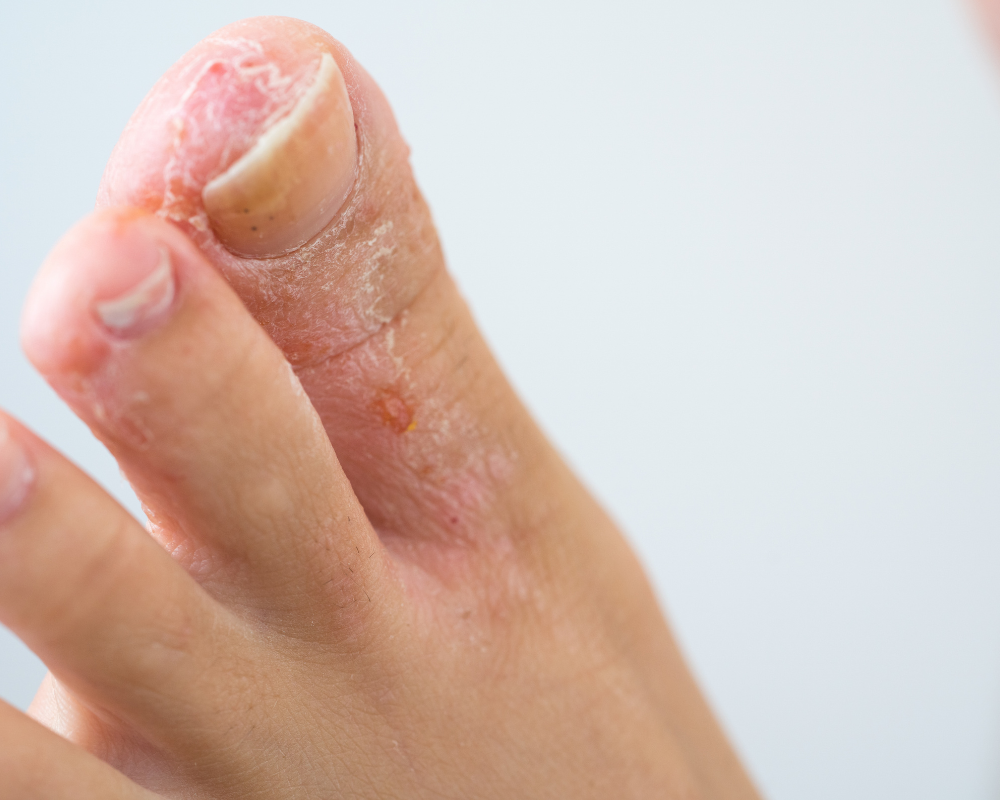
Athlete’s foot, also known as tinea pedis, is a fungal infection that affects the skin of the feet. It can cause itching, burning, scaling, cracks, and moist or whitish skin between the toes.
Despite its name, it does not only affect athletes. Anyone can develop this infection, especially when the feet remain warm and damp or come into contact with contaminated surfaces.
In most cases, treatment includes an antifungal medicine applied to the skin and measures to reduce moisture. However, not all scaling on the feet is caused by a fungal infection. When there are concerns, severe symptoms, or no improvement, you should seek advice from a pharmacist or doctor.
What is athlete’s foot?
Athlete’s foot is a fungal infection of the skin of the feet. In most cases, it is caused by fungi known as dermatophytes. These microorganisms feed on keratin, a protein found in the outermost layer of the skin, hair, and nails.
Dermatophytes grow more easily in warm, damp, and poorly ventilated environments. For this reason, the infection often appears in the spaces between the toes, where perspiration and moisture tend to accumulate.
The fungi most commonly associated with athlete’s foot are Trichophyton rubrum, Trichophyton interdigitale, and Epidermophyton floccosum.
How do you catch athlete’s foot?
Athlete’s foot can spread through direct contact with an infected person or with surfaces containing contaminated skin particles.
Changing rooms, swimming pools, gyms, and shared showers are higher-risk places. Damp environments help fungi survive, especially when people walk barefoot.
Sharing towels, socks, flip-flops, or footwear can also facilitate transmission. However, contact with the fungus does not always lead to an infection. Certain factors increase the risk, including:
- Excessive foot perspiration.
- Wearing closed footwear for long periods.
- Damp or poorly breathable socks.
- Failing to dry properly between the toes.
- Small cracks or injuries in the skin.
- A history of recurring fungal infections.
- Circulation problems.
- Diabetes or a weakened immune system.
The name “athlete’s foot” is associated with greater exposure to changing rooms, sports footwear, and perspiration. However, the infection can affect people of any age or level of physical activity.
What are the symptoms of athlete’s foot?
The symptoms of athlete’s foot vary according to the area affected and the type of infection. They may appear on one or both feet.
The most common signs include:
- Itching between the toes.
- Burning or stinging sensations.
- Scaling.
- Redness.
- Whitish, moist skin.
- Cracks or small sores.
- Dry, thickened skin.
- Fluid-filled blisters.
- Discomfort when walking.
An unpleasant odour may also develop, particularly when there is considerable moisture or associated bacterial growth.
The intensity of the itching does not always reflect the severity of the infection. Some forms cause considerable discomfort, while others only cause persistent dryness and scaling.
What are the different types of athlete’s foot?
Athlete’s foot can have different appearances. The affected area and the characteristics of the skin help healthcare professionals identify the most likely form.
Interdigital athlete’s foot
This is the most common form and appears in the spaces between the toes, particularly between the fourth and fifth toes.
It may cause:
- Itching.
- Scaling.
- Cracks.
- Whitish skin.
- Maceration.
Maceration is the softening of the skin caused by moisture. Cracks may cause pain and make it easier for bacteria to enter the skin.
Plantar or moccasin-type athlete’s foot
This form affects the sole, heel, and sides of the feet. The skin tends to become dry and thickened, with fine scaling.
Because there may be little itching, this form is often mistaken for dry skin. It also tends to be more persistent and may be associated with fungal changes in the toenails.
Vesicular athlete’s foot
This form is characterised by the appearance of small, fluid-filled blisters. It may cause intense itching, burning, and discomfort.
Avoid bursting the blisters. Breaking the skin increases the risk of a bacterial infection.
Extensive or ulcerative forms
These forms are less common but may cause erosions, deep cracks, sores, discharge, and pain.
The presence of pus, fever, localised warmth, or increasing redness requires medical assessment.
Interdigital, plantar, and vesicular patterns are among the recognised clinical presentations of tinea pedis. In atypical or persistent cases, it may be necessary to confirm the diagnosis by testing a skin sample.
Athlete’s foot or another skin condition?
Not all itching, redness, or scaling on the feet is caused by fungi.
Several conditions can have a similar appearance:
- Eczema.
- Contact dermatitis.
- Plantar psoriasis.
- Very dry skin.
- Irritation caused by footwear.
- Bacterial infections.
- Reactions to detergents, fragrances, or materials used in footwear.
The distribution of the lesions may provide clues, but it is not always enough to distinguish between these conditions.
You should seek professional assessment when the lesion:
- Has an unusual appearance.
- Persists despite appropriate care.
- Worsens with treatment.
- Returns repeatedly.
- Causes pain, pus, or severe inflammation.
How is athlete’s foot diagnosed?
In most cases, a doctor assesses the appearance of the skin, the location of the lesions, and the symptoms.
When there is uncertainty, the doctor may collect a small skin sample by gently scraping the affected area. The sample can be examined under a microscope after being prepared with potassium hydroxide, a procedure known as a KOH preparation.
A fungal culture may also be performed. This test helps confirm the presence of a fungus and distinguish the infection from eczema, psoriasis, dermatitis, or other infections.
In specific situations, molecular tests may be used to identify fungi and any bacteria that may be present in the same lesion.
How is athlete’s foot treated?
Treatment for athlete’s foot depends on the area affected, the extent of the infection, the duration of the symptoms, and whether the nails are also affected.
Localised cases are usually treated with medicines applied directly to the skin. Extensive, persistent, or recurring infections may require medical assessment and oral treatment.
Topical antifungal medicines
Topical antifungal medicines act on fungi found in the superficial layers of the skin. They are available as creams, solutions, gels, sprays, or skin powders.
Active ingredients used for athlete’s foot include terbinafine, clotrimazole, bifonazole, econazole, and ketoconazole. The choice depends on the characteristics of the infection and the person who needs treatment.
An antifungal cream containing terbinafine may be used for certain fungal skin infections. The duration and frequency of application should follow the instructions in the patient information leaflet and the pharmacist’s advice.
Cream, spray, or powder: which should you choose?
The most appropriate formulation depends on the characteristics of the skin.
Cream
Cream may be useful for localised, dry, or scaly areas. It allows greater control over the area of application.
Spray or solution
A spray or solution may make it easier to treat larger areas or areas that are sensitive to touch. Avoid inhaling the product and prevent contact with the eyes.
Skin powder
Skin powder may help keep the skin and footwear dry. Some powders contain an antifungal ingredient, while others are intended only to control moisture.
A powder designed to absorb perspiration does not necessarily replace antifungal treatment. Always check the product’s ingredients and intended use.
How should an antifungal medicine be applied?
Follow the specific instructions provided with the product. In general:
- Wash your feet with water and a mild cleansing product.
- Dry the entire skin surface thoroughly.
- Pay particular attention to the spaces between the toes.
- Wash your hands before applying the medicine.
- Apply a thin layer to the affected area and the surrounding skin, as stated in the patient information leaflet.
- Avoid contact with the eyes, mouth, and other mucous membranes.
- Wash your hands after application.
- Change your socks every day.
- Allow footwear to dry before wearing it again.
Do not apply more than the recommended amount. A thicker layer will not speed up treatment and may increase irritation.
Even when the itching improves within the first few days, complete the recommended treatment period. Stopping too early may allow the infection to persist or return.
Oral antifungal medicines
A doctor may consider an oral antifungal medicine when the infection:
- Is extensive.
- Is persistent or recurring.
- Does not respond to topical treatment.
- Affects someone with a weakened immune system.
- Is associated with a fungal nail infection.
- Causes a severe plantar form of athlete’s foot.
Terbinafine or itraconazole may be used in specific situations with a prescription.
These medicines may have contraindications, side effects, and interactions with other treatments. They should not be used without medical advice.
Should corticosteroid creams be used?
Do not apply corticosteroids alone to a possible fungal infection unless advised by a healthcare professional.
These medicines may temporarily reduce redness and itching, but they can also change the appearance of the lesion and make diagnosis more difficult.
Combinations of antifungals, corticosteroids, or antibiotics should only be used when there is an appropriate indication.
When there is an associated bacterial infection
Cracks, sores, and very damp areas can make it easier for bacteria to enter the skin.
Seek medical assessment if you experience:
- Increasing pain.
- Swelling.
- Localised warmth.
- Pus or discharge.
- A very strong unpleasant odour accompanied by a wound.
- Redness that is spreading.
- Fever.
Do not apply antibiotics without professional advice.
How long does athlete’s foot take to clear?
The time needed for improvement varies according to the active ingredient, the type of athlete’s foot, the extent of the lesions, and whether the medicine is applied correctly.
Some people experience relief from itching within the first few days. However, this improvement does not confirm that the fungus has been eliminated.
Always follow the treatment duration stated in the patient information leaflet or recommended by a healthcare professional. Seek advice from a pharmacist or doctor if the symptoms persist beyond the expected treatment period.
How can athlete’s foot be prevented?
Controlling moisture is one of the most important measures for preventing athlete’s foot. Fungi grow more easily when the feet remain warm and damp.
Follow these foot hygiene measures:
- Wash your feet every day.
- Dry the spaces between the toes carefully.
- Change your socks daily.
- Change your socks after exercise or heavy perspiration.
- Choose fabrics that help moisture evaporate.
- Alternate between different pairs of shoes.
- Allow footwear to air and dry.
- Avoid shoes that are too tight.
- Wear flip-flops in swimming pools, changing rooms, and shared showers.
- Do not share towels, socks, or footwear.
- Wash towels and socks regularly.
- Avoid scratching the affected skin.
- Check for changes in the toenails.
The fungus may remain in footwear or on other areas of the skin and cause another infection. For this reason, preventive measures should continue even after the symptoms have disappeared.
Can athlete’s foot spread to the toenails?
The fungus on the skin can spread to the toenails and cause onychomycosis. This term refers to a fungal nail infection.
The nail may become yellow, thickened, brittle, or misshapen. Debris may also accumulate underneath the nail.
Fungal nail infections usually require longer treatment. In addition, an infected nail may act as a source of reinfection for the skin. Seek professional assessment if you notice these changes.
When should you consult a doctor or pharmacist?
Seek professional advice whenever you have concerns about the cause of the lesions or the most appropriate treatment.
Assessment is particularly important when:
- The symptoms do not improve with treatment.
- The infection returns frequently.
- There are extensive blisters or sores.
- Pus, severe pain, or localised warmth develops.
- The redness spreads.
- The nails also show changes.
- There is a fever.
- The person has diabetes.
- There are circulation problems.
- The person has a weakened immune system.
- The condition affects a child.
- The person is pregnant or breastfeeding.
- Other medicines or medical conditions may affect the choice of treatment.
People with diabetes or circulation problems should seek advice sooner. Small injuries to the feet may worsen more easily and require specific care.
In summary, athlete’s foot is a common fungal infection that may cause itching, scaling, cracks, blisters, or thickened skin. Symptoms vary according to the affected area and the type of infection.
Topical antifungal medicines help treat many localised cases, provided that they are applied correctly and for the recommended period. Keeping the feet dry, alternating footwear, and avoiding the sharing of personal items also reduce the risk of transmission and recurrence.
Do you have scaling, itching, or cracks on your feet? Ask the Farmácia Aberta team for advice on choosing the most appropriate care for your situation.
Frequently Asked Questions
1. Is athlete's foot contagious?
Yes. Athlete’s foot can be transmitted through direct contact with infected skin or with contaminated surfaces and objects. Shared towels, socks, shoes, changing rooms, and showers can facilitate transmission. Washing your feet, drying them thoroughly, and avoiding sharing personal items helps reduce the risk.
2. Does athlete's foot go away on its own?
Athlete’s foot rarely goes away on its own. Symptoms may temporarily improve when feet become drier, but the fungus can remain in the skin and cause a new outbreak.
A reduction in itching or scaling does not mean the infection is cured. To prevent it from persisting, spreading, or recurring, seek pharmaceutical advice on the most appropriate treatment and care.
3. Can I use the same antifungal for my skin and nails?
Not always. Products intended for the skin may not penetrate the nail sufficiently. Onychomycosis often requires specific formulations and longer treatments. Before applying a product to your nails, check the instructions in the leaflet and seek advice from your pharmacist or doctor.
4. For how long should I apply the antifungal medication?
The duration depends on the active substance, the pharmaceutical form, and the type of infection. Some treatments last one or two weeks, while others require longer periods. Follow the information leaflet and do not stop treatment just because symptoms have improved.
5. Can athlete's foot cause blisters?
Yes. The vesicular form of athlete’s foot can cause small, fluid-filled blisters, itching, and burning. Avoid bursting the blisters, as skin damage can facilitate bacterial infection. Extensive, painful blisters or those accompanied by secretions require medical evaluation.
6. Can I go to the pool if I have athlete's foot?
The infection can be transmitted in humid and shared environments. During treatment, wear flip-flops, cover any wounds, and avoid sharing towels or footwear. You should also dry your feet thoroughly. In case of extensive or open lesions, postpone going to the pool until you have obtained professional advice.
7. Is it necessary to disinfect shoes?
Cleaning and drying your shoes helps reduce moisture and the risk of reinfection. Alternate shoes and let each pair dry completely before wearing them again. A shoe powder suitable for footwear can be helpful, provided you follow the manufacturer’s instructions.
8. How can you tell the difference between athlete's foot and dry skin?
Dry skin often causes diffuse flaking, but it doesn’t always lead to maceration or cracking between the toes. Athlete’s foot can cause itching, burning, and whitish skin in moist areas. However, the plantar form may appear as simple dryness. Professional evaluation can clarify persistent cases.
9. Can athlete's foot return after treatment?
Yes. Reinfection can occur when the fungus remains in footwear, on nails, socks, or other areas of the skin. Stopping treatment prematurely also increases the risk. Keeping feet dry and treating any nail infections helps prevent further episodes.
Bibliographic References
- Gupta AK, Wang T, Lincoln SA, Bakotic WL. Interdigital and Plantar Foot Infections: A Retrospective Analysis of Molecularly Diagnosed Specimens in the United States and a Literature Review. Microorganisms. 2025;13(1):184. doi: 10.3390/microorganisms13010184.
- Ilkit M, Durdu M. Tinea pedis: the etiology and global epidemiology of a common fungal infection. Critical Reviews in Microbiology. 2015;41(3):374-388. doi: 10.3109/1040841X.2013.856853.
- Canavan TN, Elewski BE. Identifying Signs of Tinea Pedis: A Key to Understanding Clinical Variables. Journal of Drugs in Dermatology. 2015;14(Suppl 10):S42-S47.
- Leung AKC, Barankin B, Lam JM, Leong KF, Hon KL. Tinea pedis: an updated review. Drugs in Context. 2023;12:2023-5-1. doi: 10.7573/dic.2023-5-1.
- Ely JW, Rosenfeld S, Seabury Stone M. Diagnosis and Management of Tinea Infections. American Family Physician. 2014;90(10):702-710.
- Bell-Syer SEM, Khan SM, Torgerson DJ. Oral treatments for fungal infections of the skin of the foot. Cochrane Database of Systematic Reviews. 2012;10:CD003584. doi: 10.1002/14651858.CD003584.pub2.
- Crawford F, Hollis S. Topical treatments for fungal infections of the skin and nails of the foot. Cochrane Database of Systematic Reviews. 2007;3:CD001434. doi: 10.1002/14651858.CD001434.pub2.
- DermNet. Tinea pedis: fungal foot infection.
- NHS. Athlete’s foot: symptoms, treatment and prevention.
- Centers for Disease Control and Prevention. Healthy Habits: Foot Hygiene.


